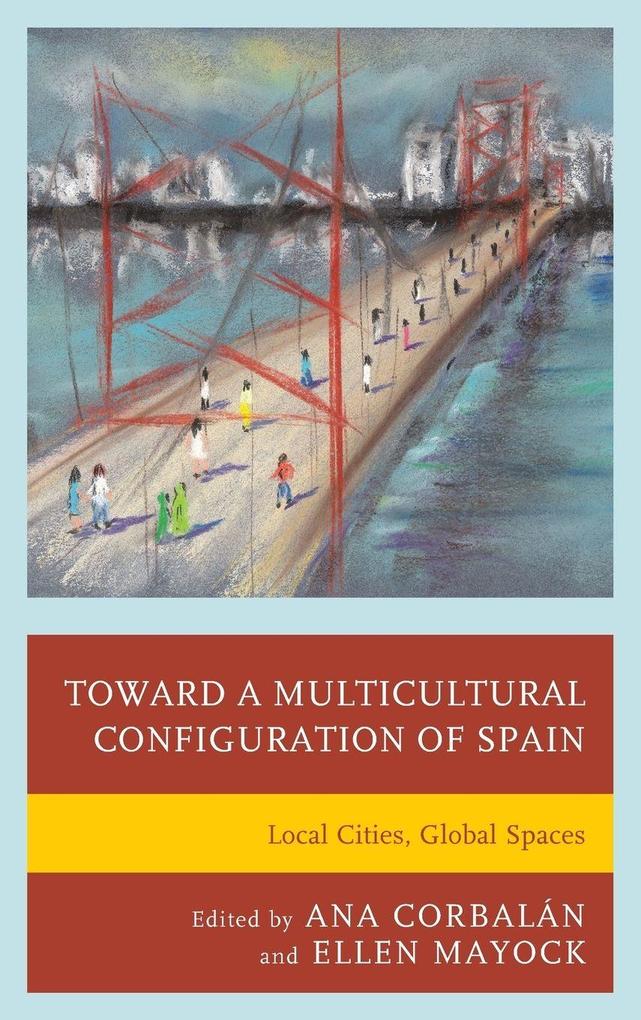
This volume foments exploration of how Spanish cities, big and small, are experiencing transformation in architecture, popular customs and festivals, economics, family dynamics, and social and political agency through the arrival of new residents from around the globe.
Inhaltsverzeichnis
Introduction: Spain's Local Cities and Global Spaces
Ana Corbalán and Ellen Mayock
SECTION I: Literary Representations of the Local and the Global
Chapter 1: Urban Peripheries: Toward a New Vision of a Multicultural Community in Rosa Montero's Instrucciones para salvar el mundo
Victoria Ketz
Chapter 2: "Una mezcla de amor profundo y asco": A/Version of Multiculturalism in Lucía Etxebarria's Cosmofobia
Hayley Rabanal
Chapter 3: The Sum of All: The Image of Madrid in Short Stories by Women Writers
María del Carmen Alfonso García
Chapter 4: City and Community in O club da calceta by María Reimóndez
Pilar Martínez-Quiroga
Chapter 5: Street, City, and Region as Global Contact Zones: Glocalized Self-Identities and Stereotypes in the Graphic Novel El Nord
Raquel Vega-Durán
SECTION II: Migration, Space, and Tourism in Documentary Films
Chapter 6: Immigration and Rhizomatic Itineraries of Resistance in the Global City: Reflections on two films: Si nos dejan and Raval, Raval
Megan Saltzman and Javier Entrambaguas
Chapter 7: Madrid as a glocal enclave in El otro lado: un acercamiento a Lavapiés by Basel Ramsis
Alicia Castillo Villanueva
Chapter 8: Migrating Virgin: Ecuadorian Immigration and the Transformation of Religious and Civic Space in Madrid
Maryanne L. Leone
Chapter 9: Rural Repopulation and the Fabrication of a Global Village in Spain: The Case of Aguaviva
Sohyun Lee
Chapter 10: Another Look at Immigration: La guerra del golf (The Golf War)
Lucía Sánchez
Thomas Deveny
SECTION III: Multicultural Encounters in Local Spaces: Cinematic Depictions
Chapter 11: Spaces Occupied, Literal and Metaphorical, in Contemporary Spanish Fiction and Film: 1997-2011
Donna Gillespie
Chapter 12: The City I Live in: Almodóvar Reshapes Madrid as Spain Goes Glocal
María R. Matz and Carole Salmon
Chapter 13: Geography of Capital: Torremolinos, Modernity and the Art of Consumption in Spanish Film
William Nichols
Chapter 14: Immigration and Spanish Subjectivity in No habrá paz para los malvados
Diana Norton
Chapter 15: When Multicultural Landscape Becomes Tragic Stage: Spanish Film and Immigration on the Verge of the Millennium
Roberto Robles-Valencia
CONTRIBUTORS