Bücher versandkostenfrei*100 Tage RückgaberechtAbholung in über 100 Filialen
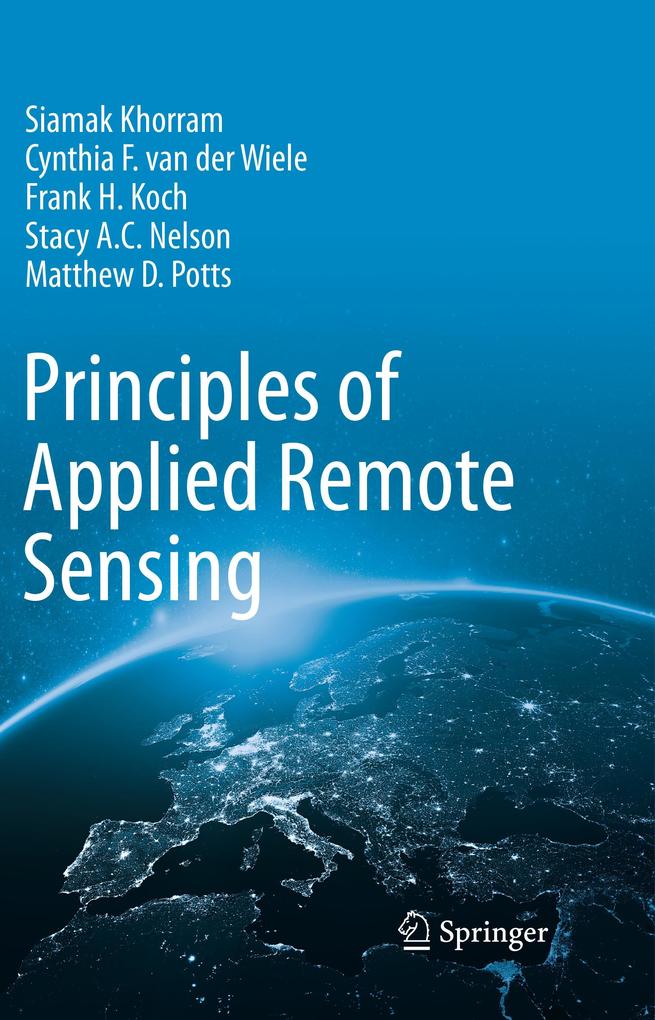
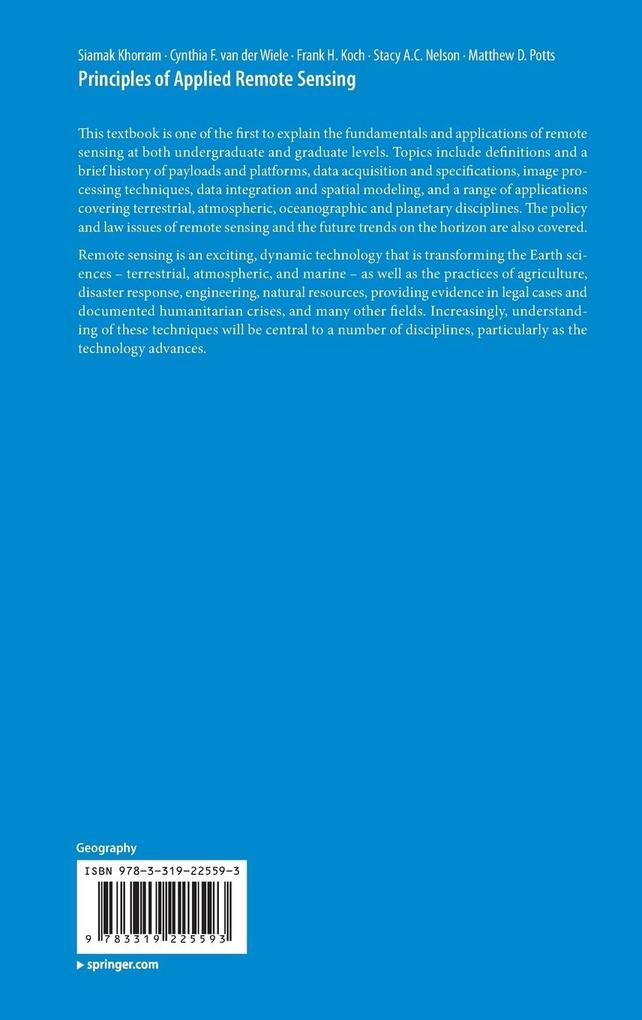
This textbook is one of the first to explain the fundamentals and applications of remote sensing at both undergraduate and graduate levels. Topics include definitions and a brief history of payloads and platforms, data acquisition and specifications, image processing techniques, data integration and spatial modeling, and a range of applications covering terrestrial, atmospheric, oceanographic and planetary disciplines. The policy and law issues of remote sensing and the future trends on the horizon are also covered.
Remote sensing is an exciting, dynamic technology that is transforming the Earth sciences - terrestrial, atmospheric, and marine - as well as the practices of agriculture, disaster response, engineering, natural resources, providing evidence in legal cases and documented humanitarian crises, and many other fields. Increasingly, understanding of these techniques will be central to a number of disciplines, particularly as the technology advances.
Inhaltsverzeichnis
Data Acquisition. - Data Processing Tools. - Terrestrial Case Study Applications of Remote Sensing. - Atmospheric Applications. - Oceanographic Applications. - Planetary Applications. - International Laws, Charters, and Policies. - Future Trends in Remote Sensing.
I had found the book informative and easy to read. I would recommend it as a review of a very large subject area, one to have on the shelf and lend to others perhaps, since it is best used as a guide to other more specific works. (Andy Vick, The Observatory, Vol. 136 (1255), December, 2016)
Es wurden noch keine Bewertungen abgegeben. Schreiben Sie die erste Bewertung zu "Principles of Applied Remote Sensing" und helfen Sie damit anderen bei der Kaufentscheidung.