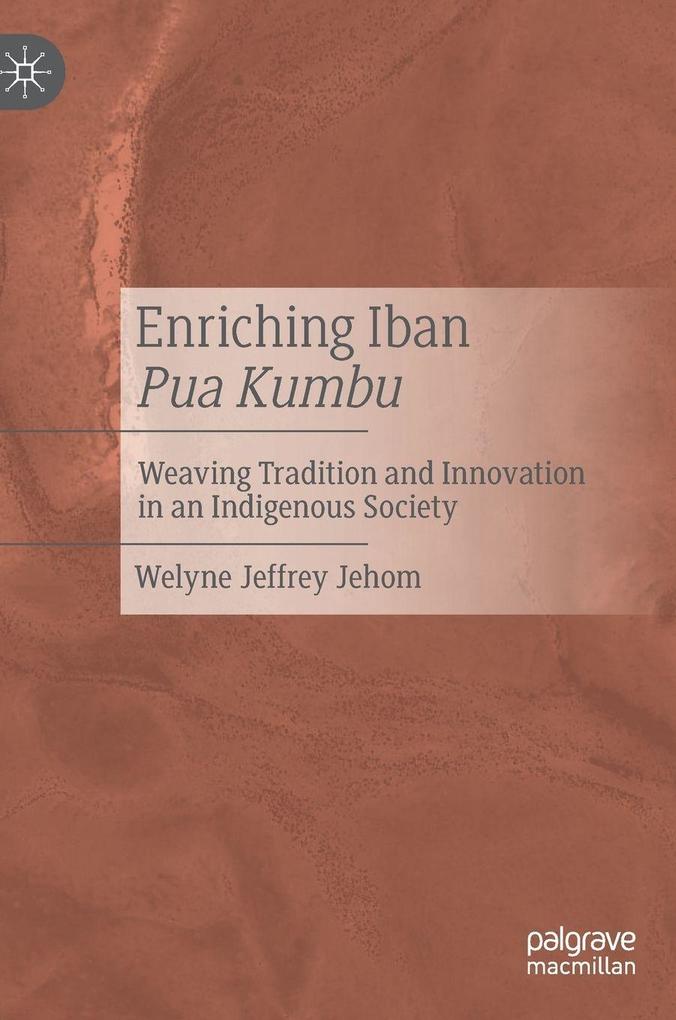
Textiles have been a highly valued part of many Indigenous societies across the world and over millennia. This pathbreaking book examines the large woven ceremonial cloths known as pua kumbu, long associated with the Iban people of the interior of Sarawak, Malaysia. In both scholarly and popular studies of these sacred cloths, the process of creating pua kumbu is identified explicitly with the women who weave them, using oral tradition for the passing on of designs and practice. Based on more than a decade of ethnographic fieldwork and collaborative engagement with a longhouse community, this study breaks new ground, both empirically and conceptually. It is framed around a number of key themes: the origins, symbolism and use of the cloths; the place of female weavers in Iban society; the creative tension between conservation, innovation and transformation; the significance of Indigenous knowledge for sustainable community development and empowerment; and the role of exhibitions of pua kumbu in reaching beyond the academic world. Enriching Iban Pua Kumbu is a valuable work for advanced students, researchers and general readers interested in the intersection of material culture, social status and community engagement, such as cultural anthropologists, archaeologists, economists, museum curators and historians.
Inhaltsverzeichnis
List of Figures. - Abbreviations and Acronyms. - Preface and Acknowledgements. - Chapter 1: Introduction: Indigenous Knowledge and Community Experience. - Chapter 2: The Iban Pua Kumbu Weaving Tradition: Origins, Symbolism, Use. - Chapter 3: Social Stratification of the Women Weavers. - Chapter 4: Transforming the Weaving Tradition. - Chapter 5: Conservation of Intangible Knowledge. - Chapter 6: Taking Research and Community Engagement beyond the Academic. - Chapter 7: The Sustainability of Pua Kumbu Weaving: Production and Future Opportunities. - Chapter 8: Conclusion. - Glossary of Non-English Terms. - Bibliography. - Index.