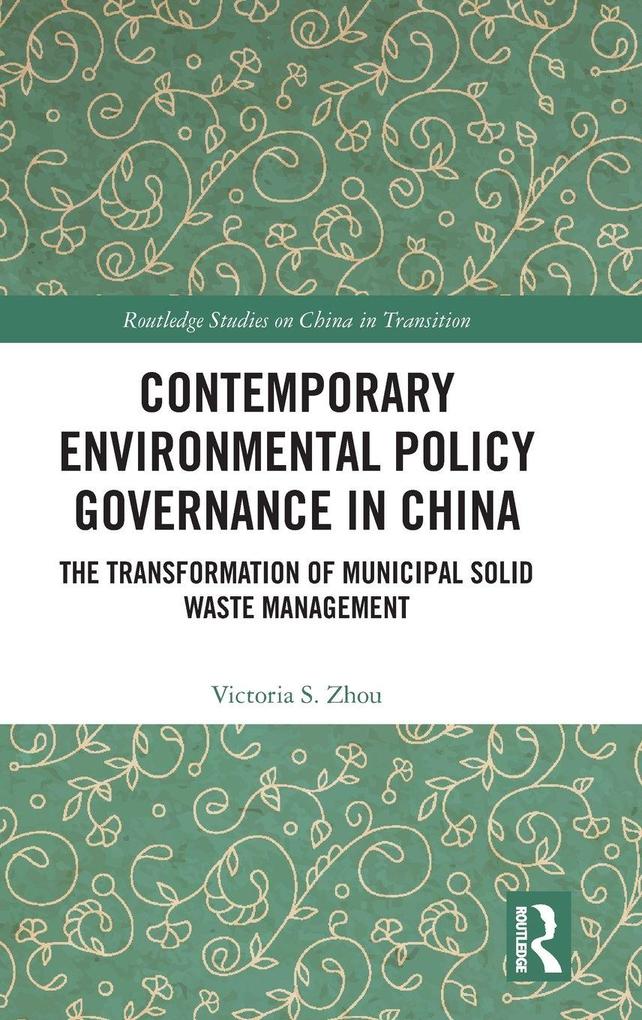
This book examines environmental governance in China during the Xi Jinping era.
Drawing on extensive fieldwork, this book uses the eco-transformation of waste management as a case study to reveal how central authorities exert political pressure to enforce national policy visions, while local governments frequently resort to "minimum compliance"-a strategy that allows local authorities to cope with and sidestep centrally mandated policies while avoiding the consequences of policy failure. The book uncovers persistent structural and deliberate compromises in policy steering, explaining why recentralisation under Xi has not significantly improved the implementation of national policies that have long underperformed, much like under his predecessors. Exploring debates on state capacity, bureaucratic behaviour, and local governance in contemporary China, it provides a deeper understanding of authoritarian environmental governance.
Offering fresh insights into China's policy processes, this book will be a valuable resource to students and scholars of Chinese politics and environmental policy.
Inhaltsverzeichnis
1. Introduction 2. Environmental Governance in China 3. MSW Eco-Management: A Cycle of Policy Trials and Failures 4. Central Steering in Policy Formulation 5. Local Steering in Policy Mobilisation 6. Policy Implementation: Minimum Compliance 7. Change Amid Continuity