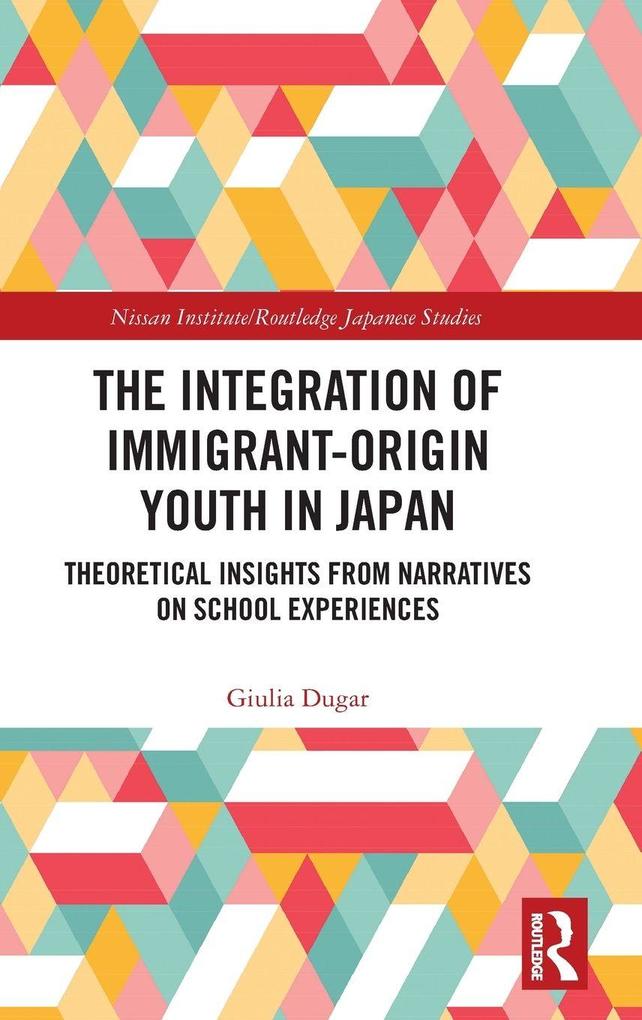
This book examines Japan's transformation into a country of immigration, offering a timely perspective on how a society long regarded as homogeneous is adapting to new forms of diversity.
Drawing on 62 in-depth interviews with young people of Chinese, Korean, and Brazilian origin, it explores how the children of immigrants navigate Japan's demanding education system and the broader challenges of social inclusion. Schools emerge as crucial arenas where opportunities for integration intersect with persistent inequalities, shaping young people's life chances and identities. Combining rich personal narratives with established theories of immigrant incorporation, the book bridges empirical and theoretical research, situating Japan within global migration debates. It challenges the notion of Japan as an exceptional case, demonstrating instead how its experience mirrors wider international patterns of demographic change, labour shortages, and cultural negotiation.
Offering fresh insights into immigrant integration in a non-Western context by making Japan's case a vital reference point for understanding how societies worldwide respond to increasing diversity, this book will appeal to scholars, students, and policymakers in sociology, migration studies, education, and Japanese studies.
Inhaltsverzeichnis
Introduction 1 Immigrants' paths of incorporation in countries of destination: The Western context 2 Theorising immigrants' integration in past and present Japan 3 Today's migration to Japan 4 The Japanese education system and its challenges for foreign students 5 Is there a strategy? Observing school and academic progression 6 Inside and beyond the classroom: Family, peers, language, and identity 7 Building a typology of immigrant-origin youths Conclusions Appendix: The research design