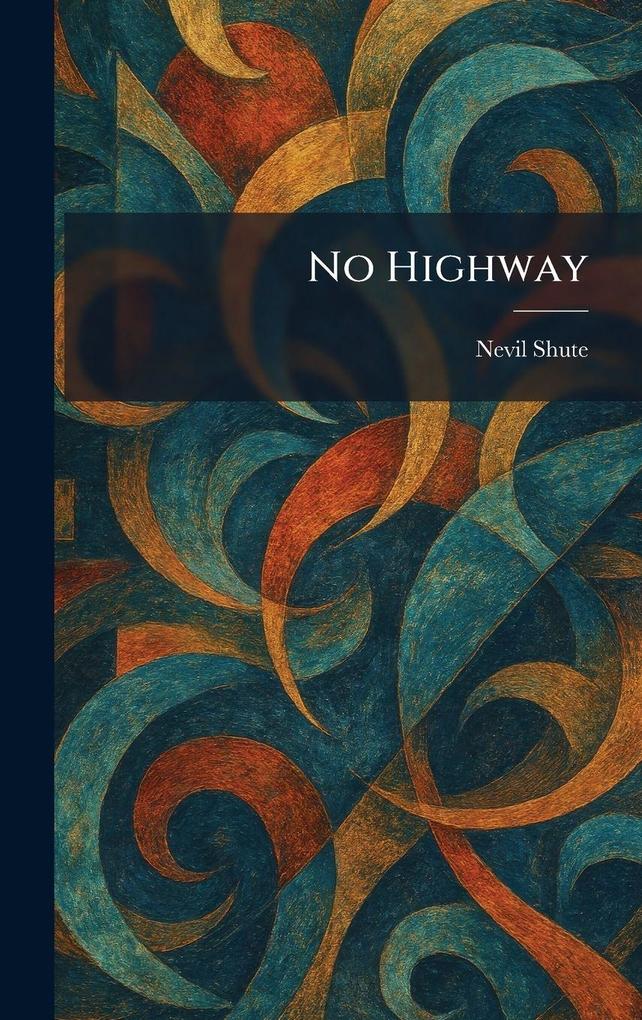
"No Highway" is a gripping technical thriller that explores the high-stakes world of mid-century aviation and the intersection of scientific theory with human intuition. The story follows Theodore Honey, a brilliant but eccentric scientist working at a prestigious aircraft research facility. Honey is convinced that a new model of transatlantic airliner suffers from a fatal structural flaw: metal fatigue that will cause the tailplane to fail after a specific number of flying hours.
As Honey struggles to convince a skeptical establishment of his mathematical predictions, he finds himself on a flight aboard one of the very aircraft he believes is doomed. The narrative masterfully builds tension as Honey's abstract calculations collide with the physical reality of a journey across the Atlantic. Drawing on deep aeronautical knowledge, the work provides a realistic and fascinating look into the pressures of aircraft testing and the weight of engineering responsibility. "No Highway" remains a landmark of suspense literature, examining the courage required to defend one's convictions against institutional doubt and the profound human element behind technological progress.
This work has been selected by scholars as being culturally important, and is part of the knowledge base of civilization as we know it. This work was reproduced from the original artifact, and remains as true to the original work as possible. Therefore, you may see the original copyright references, library stamps (as most of these works have been housed in our most important libraries around the world), and other notations in the work.
This work is in the public domain in the United States of America, and possibly other nations. Within the United States, you may freely copy and distribute this work, as no entity (individual or corporate) has a copyright on the body of the work.
As a reproduction of a historical artifact, this work may contain missing or blurred pages, poor pictures, errant marks, etc. Scholars believe, and we concur, that this work is important enough to be preserved, reproduced, and made generally available to the public. We appreciate your support of the preservation process, and thank you for being an important part of keeping this knowledge alive and relevant.