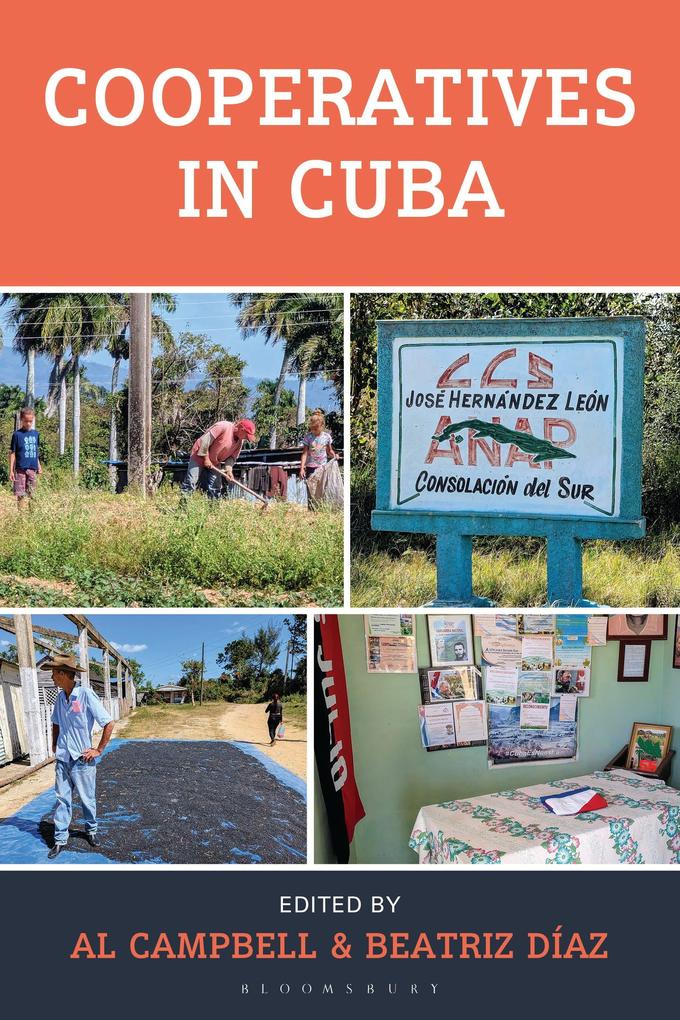
This book is a broad and rich collection of contributions to the debate on cooperatives in Cuba and argues that they have the potential to both improve Cubans' material standard of living and to strengthen the Revolution's project of building socialism.
For almost 200 years advocates of socialism have argued about whether having cooperatives as base production units is inconsistent with socialism's requirements for a socially and democratically planned economy. Concerning what is possible, the contributors argue that organizing large parts of Cuba's existing and necessary small and medium scale production into cooperatives would be beneficial both for improving Cubans' material standard of living and for strengthening the Revolution's project of building a socialist economy. Concerning the cooperatives that exist in Cuba today, the contributors argue two factors constitute key barriers to the cooperatives' ability to achieve these goals. First, their performance is severely crippled by inadequate autonomy of cooperatives from those state institutions tasked with their management under. Second, cooperatives need to be massively developed and promoted not only in the agricultural sector where they already play such an important role, but also in the much larger nonagricultural sector of the economy, where an official program to do exactly that has been "on pause" for over a decade. Cooperatives in Cuba is a call for the Cuban government to promote an authentic cooperativization of significant parts of the small and medium productive units that are explosively developing there, as a part of its new socioeconomic model for its desired "prosperous and sustainable socialism."
Inhaltsverzeichnis
Part I: Background
Chapter 1: Cooperatives and Socialism in Cuba Al Campbell
Chapter 2: Are Worker Cooperatives Efficient? Virginie Pé rotin
Part II: Cooperatives in Revolutionary Cuba: Past and Present
Chapter 3: A Brief History of Cuba's Agricultural Cooperatives Jesú s Cruz Reyes
Chapter 4: The Economic Importance of Agricultural Cooperatives in Cuba Armando Nova Gonzá lez
Chapter 5: Promise of a Cuban Cooperative Economy: A Balance One Decade Later Camila Piñ eiro Harnecker
Part III: Topics in Cooperativism in Cuba
Chapter 6: Cooperatives and Gender: The Situation in Cuba Elena Dí az
Chapter 7: Cooperative Education and Training: The University of Havana Experience Beatriz Dí az
Chapter 8: The Creation of Second-Degree Cooperatives in Cuba: An Alternative for Strengthening Agrifood Value Chains Francisco Julio Cá rdenas Martí nez and Lisset Cá rdenas Palazó n
Part IV. Improving Cuba's Cooperatives: Case Studies
Chapter 9: Cooperation and Local Sustainable Development: The Case of the Vista Hermosa Farm Lisset Cá rdenas Palazó n and Francisco Cá rdenas Martí nez
Chapter 10: Cooperative Principles, Integral Cooperative Management, and Local Development in Eastern Cuba. A Case Study of the Cooperative Benilde Orozco and Extending It Rubé n Villegas Chá dez and Adelaini Torres Leó n
Chapter 11: MSMEs and Cooperatives in Production Chains: Trajectories of Productos del Valle Esteban Sá nchez Gó mez, Luis Orlando Aguilera Garcí a, Rosa Mercedes Almaguer Torres, Neyvis Mariela Moreno Moreno, Kerslin Velá zquez Rodrí guez, and Yanet Ferná ndez Peñ a
Index