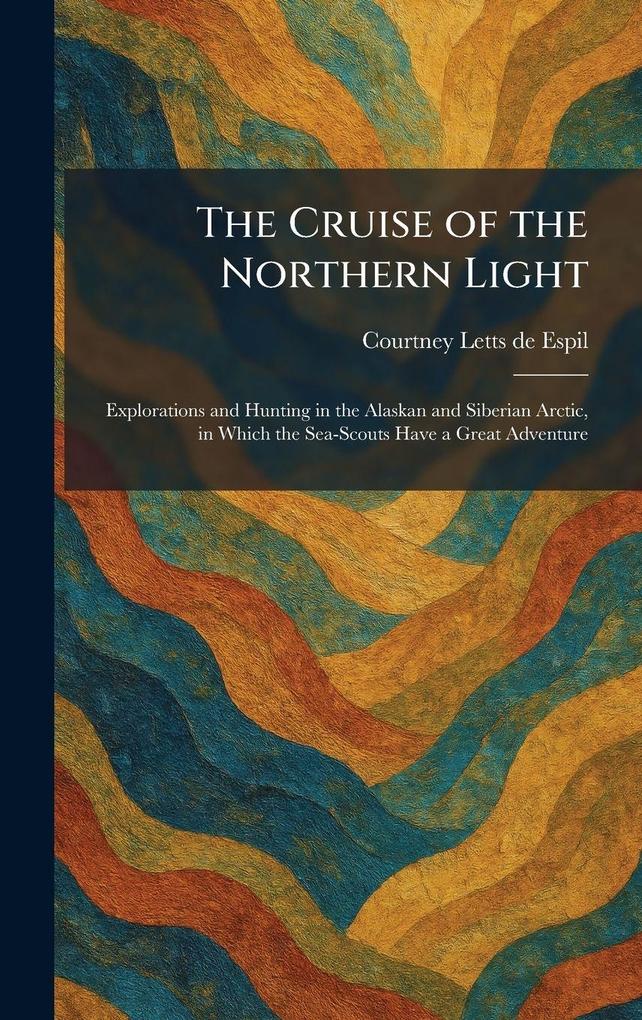
"The Cruise of the Northern Light" is a gripping firsthand account of maritime exploration and adventure in the remote reaches of the North. This work documents an ambitious expedition into the Alaskan and Siberian Arctic, chronicling the trials and discoveries of a crew navigating some of the world's most treacherous waters. Accompanied by a group of Sea Scouts, the voyage blends scientific observation with the rugged pursuit of big-game hunting, offering a unique perspective on the polar frontier.
The narrative provides vivid depictions of the icy landscapes and coastal environments of both the American and Russian Arctic. From the frozen reaches of Alaska to the desolate shores of Siberia, the text captures the challenges of early 20th-century polar travel, including encounters with local wildlife and the constant struggle against the elements. This account serves as a significant historical record of Arctic geography and a testament to the spirit of adventure that defined the era. Readers interested in polar history, nautical expeditions, and the tradition of wilderness exploration will find "The Cruise of the Northern Light" to be a compelling and informative journey into the heart of the Arctic.
This work has been selected by scholars as being culturally important, and is part of the knowledge base of civilization as we know it. This work was reproduced from the original artifact, and remains as true to the original work as possible. Therefore, you may see the original copyright references, library stamps (as most of these works have been housed in our most important libraries around the world), and other notations in the work.
This work is in the public domain in the United States of America, and possibly other nations. Within the United States, you may freely copy and distribute this work, as no entity (individual or corporate) has a copyright on the body of the work.
As a reproduction of a historical artifact, this work may contain missing or blurred pages, poor pictures, errant marks, etc. Scholars believe, and we concur, that this work is important enough to be preserved, reproduced, and made generally available to the public. We appreciate your support of the preservation process, and thank you for being an important part of keeping this knowledge alive and relevant.