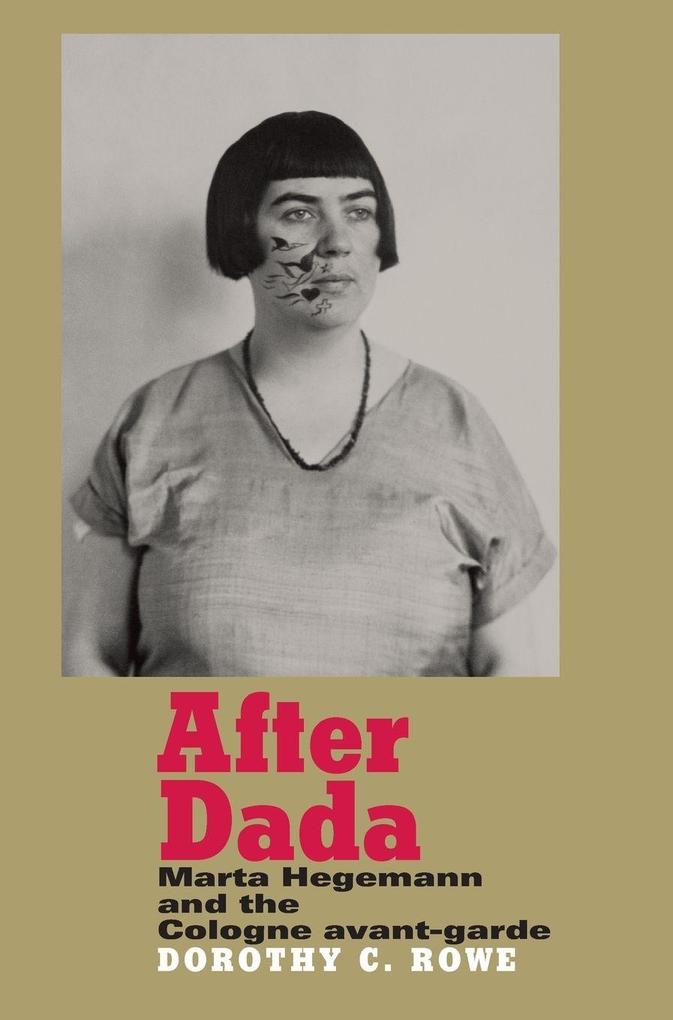
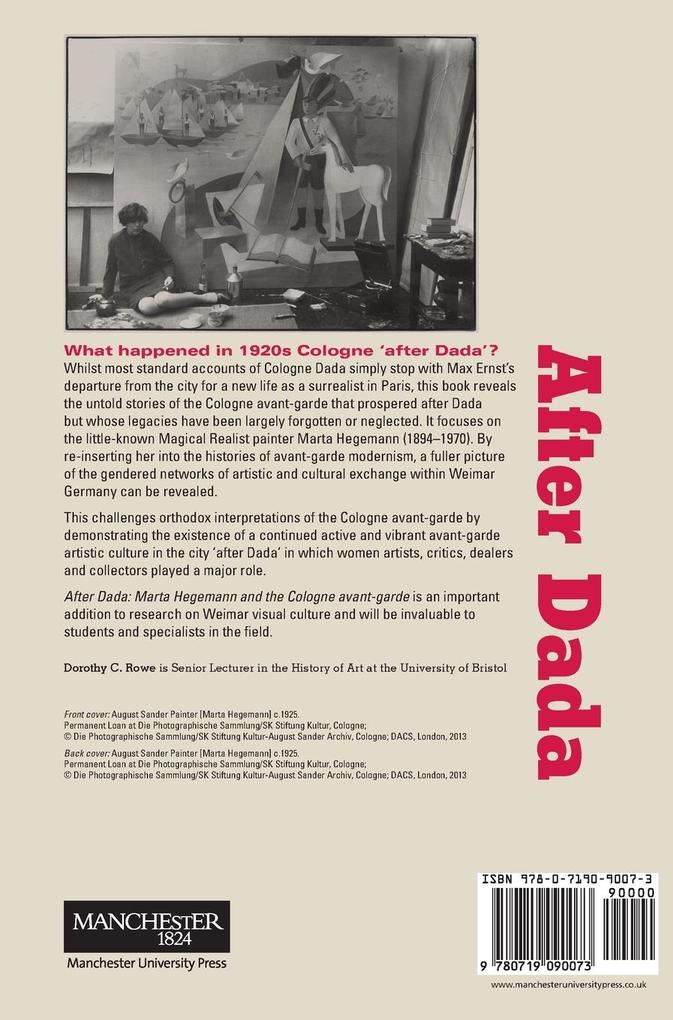
Dorothy Rowe's 'After Dada' redefines our understanding not only of avant-garde activities in Cologne between the wars, but also of the crucial role played by women artists previously given little coverage. Rowe brings to light the careers and works of the, until now, relatively little known Marta Hegemann and Angelika Fick-Hoerle, contextualised within the artistic networks in which they practiced, which included Max Ernst, Anton Raderscheit, August Sandler and Kurt Schwitters. By exploring the major roles played by Hegemann and Fick-Hoerle within this period, Rowe presents a new interpretation of cultural activity during the troubled period between the end of the First World War and the rise of National Socialism. Meticulously researched and convincingly argued, this book will mark a fantastic contribution towards studies in Germany art and culture in the early twentieth century. Mike O'Mahony, Reader in History of Art, University of Bristol -- .