Bücher versandkostenfrei*100 Tage RückgaberechtAbholung in über 100 Filialen
Primarily aimed at modellers working in the field of HTA, regulators and reviewers of reimbursement dossiers and cost-effectiveness analyses.
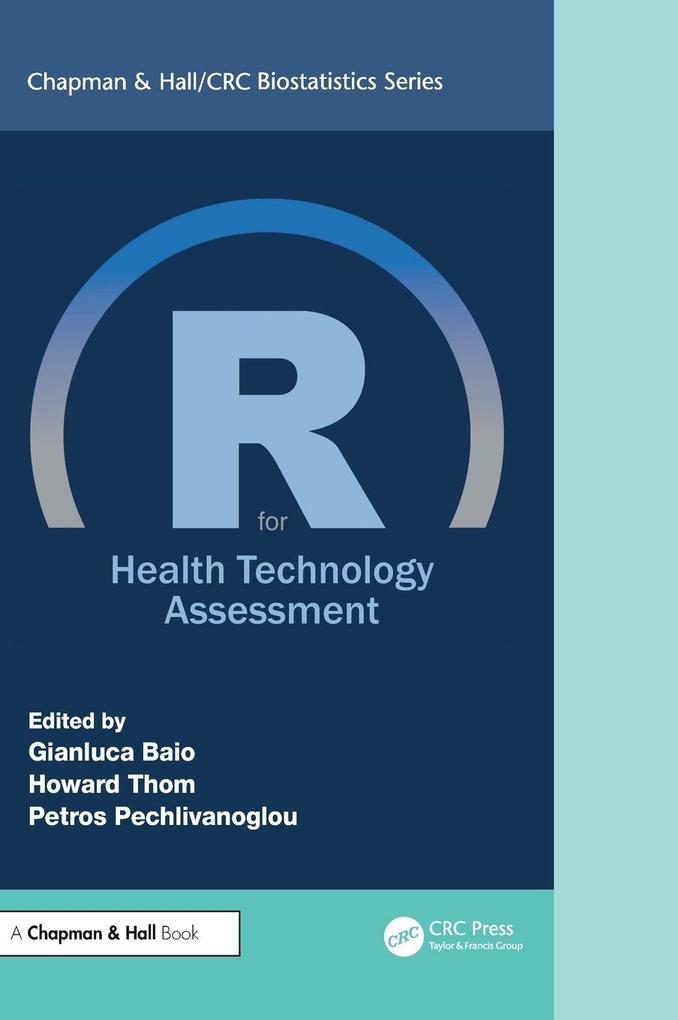
R for Health Technology Assessment discusses the use of proper statistical software, specifically R, to perform the whole pipeline of analytic modelling in health technology assessment (HTA). It has been designed with the objective of establishing the use of R as the standard tool for HTA amongst academics, industry practitioners and regulators. It covers a lot of ground, starting with the necessary background in HTA, R and statistical inference, followed by various modelling tools, ranging from missing data, survival analysis and decision trees, through to multistate models and discrete event simulation. The methods are all illustrated with many detailed worked examples and case studies using real data, and there are detailed descriptions of the code and processes.
Key Features:
This text is primarily aimed at modellers working in the field of HTA, regulators and reviewers of reimbursement dossiers and cost-effectiveness analyses. It also complements a wide range of undergraduate and graduate programmes in HTA, health and public health economics, as well as academic researchers in the field of statistical modelling for HTA.
Inhaltsverzeichnis
1. Introduction to Health Technology Assessment. 2. Introduction to R. 3. Why R? A Low- and Middle-Income Countries Perspective. 4. Introduction to statistical modelling. 5. Individual level data. 6. Missing data. 7. Introduction to survival analysis in HTA. 8. Decision tree models. 9. Cohort Markov Models in Discrete Time. 10. Network Meta-Analysis. 11. Continuous time multistate models. 12. Discrete Event Simulation in R. 13. Population-adjusted indirect comparisons. 14. R and shiny in HTA.
Es wurden noch keine Bewertungen abgegeben. Schreiben Sie die erste Bewertung zu "R for Health Technology Assessment" und helfen Sie damit anderen bei der Kaufentscheidung.