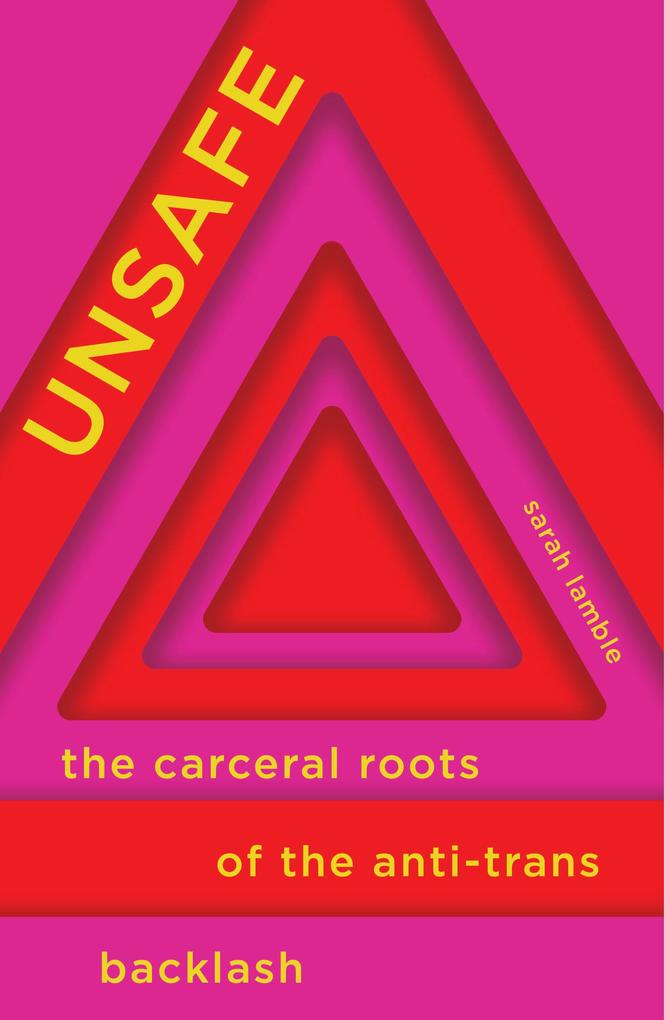
The fiercest battles over gender today aren't just about identity or womanhood-but about punishment, fear, and control.
The twenty-first century "gender wars" have been driven by a powerful and seductive narrative: that safety can be secured through exclusion, surveillance, and the policing of difference. These punitive logics have gained momentum across the political spectrum, fueling an anti-trans backlash and distorting the meaning of safety itself.
Unsafe is a clear-eyed and decisive challenge to the toxic ideas at the heart of this backlash. With patient rigour, Lamble exposes how carceral approaches to safety fail to address root causes of harm, ultimately deepening social divisions and legitimising new forms of violence and control.
Drawing on feminist and queer traditions as well as their experience organizing against prisons and policing, Lamble makes a principled case for a different vision: one where safety is not built on punishment but on collective care, radical solidarity, and transformative justice.
Inhaltsverzeichnis
Introduction: Rethinking safety politics in the wake of the 'gender wars'
Part I: The safety politics of the gender wars
Unsafe: the rise of the "gender wars" in Britain
Traces the manufacturing of a "trans danger" discourse, and how it was amplified by "gender critical" campaigners, politicians, and corporate media to escalate the gender wars in Britain.
Weaponizing safety: the carceral politics of the "gender wars"
Argues that carceral politics are a central factor in understanding how and why the gender wars escalated so rapidly in Britain, and makes the case for rethinking safety politics more broadly.
How we got here: the neoliberal carceral roots of "bad man" feminism
Traces a political shift in Britain from a broader critique of patriarchal structures to a narrower focus on the "violent man" as the new enemy of feminism, and shows "trans danger feminism" as an extension of this logic.
Part II: Carceral politics don't keep us safe
Dangerous others and the problem of sexual exceptionalism
Argues that at the heart of narratives of dangerous sexual predators are logics of "sexual exceptionalism"-a framing that treats sexual violence as fundamentally distinct from other harms and people who commit sexual harm as inherently different from ordinary people.
Why prisons, policing, and punishment don't make us safe
Explains why a feminist abolitionist approach to safety is necessary to overcome the current impasse of the gender wars and the wider limits of existing safety politics.
Part III: Building a transformative politics of safety
From symbolic to material safety
Makes the case that an abolitionist approach requires a refocus on the material conditions necessary for genuine safety, e.g. housing, health care, food security, and freedom of movement.
From individual to collective safety
Argues that an abolitionist approach to safety requires a reorientation from individual to collective agency.
Safety through solidarity
Explores what a politics of 'no one is disposable' means in practice, and how this politics can foster greater practices of safety and liberation for all.
Conclusion: We keep us safe
Summarizes the importance of building queer anti-carceral solidarities in both local and international contexts and the necessity of connecting struggles for gender justice with those of racial, economic, social, environmental, and anticolonial movements.