Bücher versandkostenfrei*100 Tage RückgaberechtAbholung in über 100 Filialen
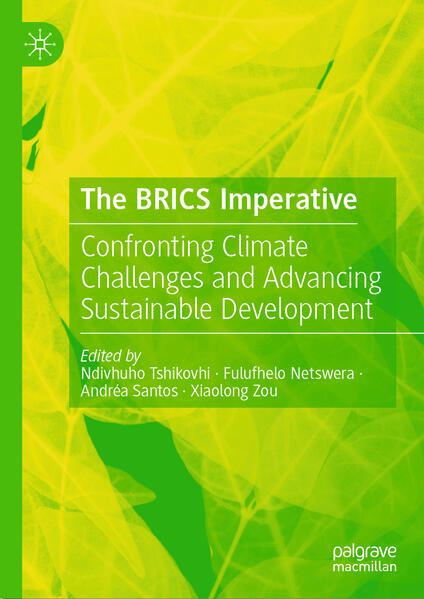
This book offers a multidisciplinary exploration of how BRICS countries, namely Brazil, Russia, India, China and South Africa, are addressing climate change through policy innovation, technological progress and collaborative governance. With contributions from academics in environmental science, education, marketing, energy and agriculture, the volume examines the link between climate and development in the Global South. The book opens with chapters on land use, agricultural practices and food systems, then moves on to discuss sustainable finance, disaster resilience, energy cooperation and education for sustainable development. The final chapters assess consumer behaviour, sustainable marketing strategies and circular economy practices within the BRICS context.
Using country-specific case studies and comparative analysis, this book highlights the importance of local responses to climate change, inclusive economic models and the role of developing nations in shaping global climate governance. It calls for stronger policy alignment, cross-border collaboration and context-sensitive knowledge creation and is a timely addition to climate scholarship. An invaluable resource for researchers, policymakers, postgraduate students and development practitioners who seek to understand how emerging economies can move towards low-carbon and resilient futures.
Inhaltsverzeichnis
Chapter 1: Climate-Compatible Agricultural Waste Management Strategies for Resilient Land Use in South Africa. - Chapter 2: Harnessing Indigenous Leafy Vegetables for Poverty Alleviation and Economic Upliftment in Marginalized South African Communities. - Chapter 3: Evaluating the Potential of Agrivoltaic System for Mitigating Climate Change Impacts in BRICS Countries. - Chapter 4: Higher Education for Sustainable Development: Brazil and South Africa s Path Trajectory Towards SDG 4. Chapter 5: Climate Change and Sustainable Development in BRICS Economies: A South African Policy Perspective. - Chapter 6: Socio-Economic Impacts of Climate - Driven Disasters: The South African Perspective. - Chapter 7: How Are Emerging Financial Instruments Transforming Sustainable Infrastructure Finance in the Face of Climate Change? . - Chapter 8: Development of BRICS Energy Cooperation in the Context of Global Challenges and Threats, . - Chapter 9: Prioritizing Sustainable Growth: Trends & Prospects of Addressing Climate Challenges within BRICS. - Chapter 10: How Effective Are Sustainable Marketing Strategies in the South African Consumer Market? , . - Chapter 11: The Role of Marketing in Reducing Carbon Emissions: Perspectives from the South African Consumer Market. - Chapter 12: Circular Economic Practices in BRICS: Challenges, Opportunities, and Policy Implications - A Systematic Review.
Es wurden noch keine Bewertungen abgegeben. Schreiben Sie die erste Bewertung zu "The BRICS Imperative" und helfen Sie damit anderen bei der Kaufentscheidung.