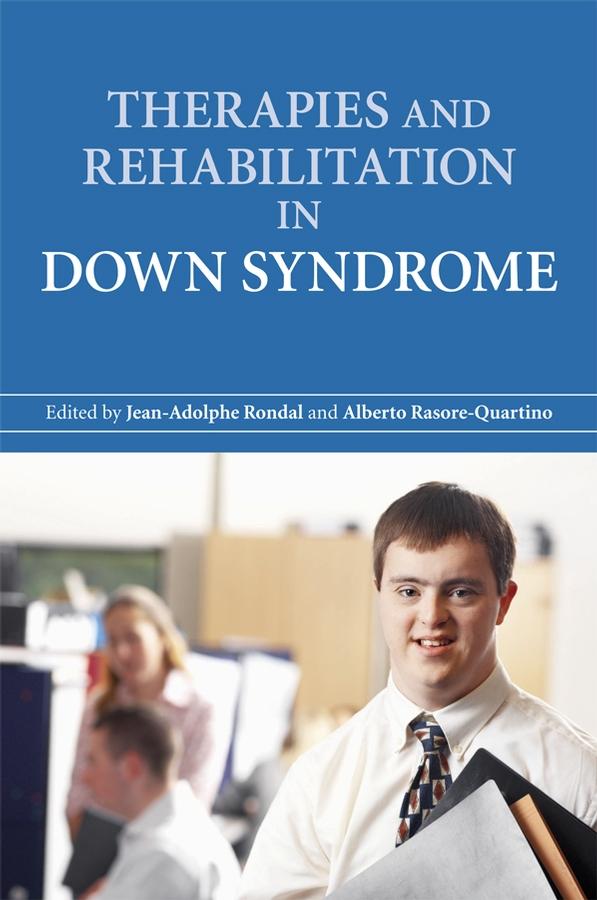
Therapies and Rehabilitation in Down Syndrome covers the entire lifespan of a DS patient, from infancy to 60 years and beyond, focusing not simply on identifying problems, but providing a detailed look at major therapeutic approaches.
The life expectancy of people with Down Syndrome has increased dramatically over the last century. It is now considered to be around 60 years and is likely to improve in the future. This has prompted intriguing new research and is motivating interest in the scientific community for the advanced years of people with Down Syndrome, who will now be members of society for much longer.
Therapies and Rehabilitation in Down Syndrome provides up to date details of the central issues concerning the syndrome and the major strategies and perspectives for genetic, pharmacological, and medical therapies and treatments, as well as the cognitive, linguistic, educational, and inclusion rehabilitation strategies. Taking a comprehensive, therapeutic and interdisciplinary approach, this book gives a comprehensive life-span perspective.
Written by an international team of prominent authors, Therapies and Rehabilitation in Down Syndrome is essential for those interested in best-practice. It provides a unique reference for practitioners looking for guidelines for therapies and clinical applications of research findings, as well as to educators and parents.
Inhaltsverzeichnis
Preface. Authors' Affiliations.
Introduction (J-A. Rondal, Liè ge, and A. Rasore Quartino, Genoa).
1 Perspectives on Gene-based Therapies (J-M. Delabar, Paris).
2 The Biological Bases of Pharmacological Therapies in Down Syndrome (M. Pritchard, Clayton, Victoria and I. Kola, Rahway, NJ).
3 Carbon Metabolism, Immunology and Growth Hormone (C. Romano, Troina, Sicily).
4 Medical Therapies in the Lifespan (A. Rasore Quartino, Genoa).
5 Language Rehabilitation (J-A. Rondal, Liè ge).
6 Cognitive Rehabilitation (G. Mahoney, Cleveland, OH).
7 Psychomotor Rehabilitation in Down Syndrome (G. M. Guazzo, Ottaviano).
8 Families and Services (S. Soresi and L. Ferrari, Padua).
9 School Inclusion: The Italian Model (L. Cottini, Udine, Friuli, and L. Nota, Padua).
10 Mainstream or Special Education for Teenagers with Down Syndrome (S. Buckley, G. Bird, B. Sacks, and T. Archer, Portsmouth).
11 Professional Inclusion as Global Therapy for the Individual with Down Syndrome (J. Perera, Palma de Mallorca).
12 Quality of Life (C. Baccichetti, Padua).
Conclusions (J-A. Rondal, Liè ge, and A. Rasore Quartino, Genoa).
Index.