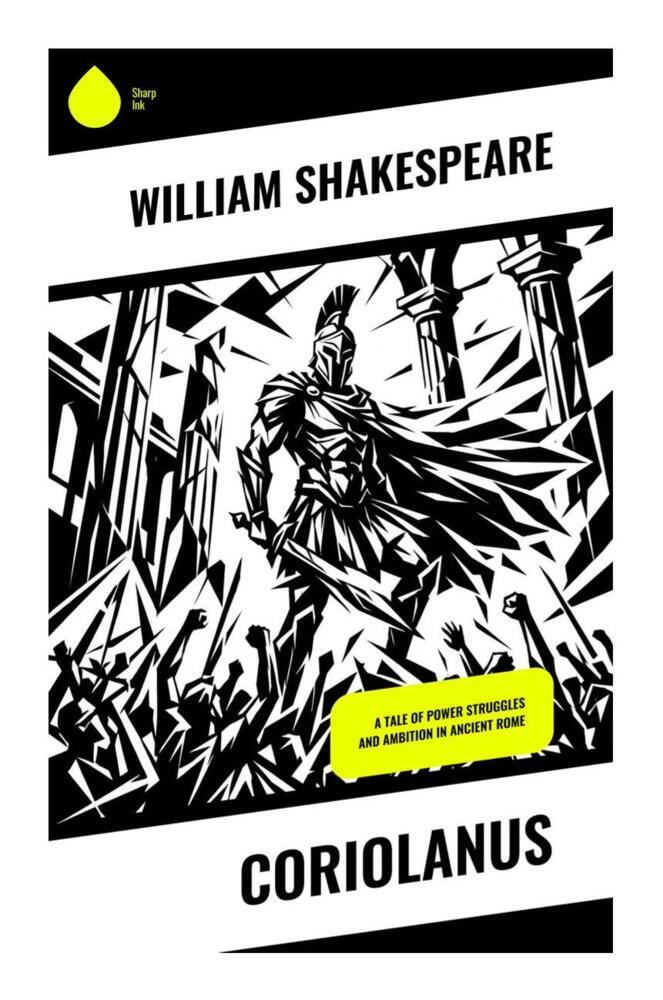
William Shakespeare's 'Coriolanus,' a compelling tragedy, delves into the complex interplay of personal ambition and political strife in ancient Rome. The narrative chronicles the rise and fall of the war hero, Caius Martius Coriolanus, whose disdain for the plebeians and unyielding pride precipitate his downfall. Blending powerful rhetoric with fierce martial imagery, Shakespeare examines themes of honor, identity, and the volatile dynamics of power and populism. Set against the backdrop of Rome's turbulent socio-political landscape, the play is a profound exploration of the human condition and the societal tensions that reverberate across time, making it as relevant today as it was in its Elizabethan context. Shakespeare, often regarded as the greatest playwright in the English language, uniquely captures the psychological intricacies of his characters. His experiences, intertwined with the political milieu of Elizabethan England, likely influenced his portrayal of political conflict and social hierarchy in 'Coriolanus.' Drawing from historical texts, particularly Plutarch's 'Lives of Noble Greeks and Romans,' Shakespeare expertly intertwines historical narrative with dramatic intensity, offering audiences a window into the timeless intricacies of power and pride. 'Coriolanus' is a masterclass in dramatic storytelling-a must-read for students of literature and history alike. It provides valuable insights into human psychology and governance, evoking contemplation of our own modern societal structures. Shakespeare's intricate character development and eloquent prose make this tragedy an essential piece for anyone seeking a deeper understanding of the interplay between individual agency and collective governance. Thus, this profound work invites readers to engage with pressing themes that have perpetually captivated human attention.