











Munich is a city built on archives-some public, some sealed, and some never meant to be found.
When Markus and Catrina arrive to confront the final remnants of the Custodes Silentii, they enter a landscape where testimony has been buried for decades and every institution has something to lose if the truth resurfaces.
Inside the city's legal and ecclesiastical corridors, old alliances fracture. Files vanish. Witnesses recant. And the machinery that once protected the region begins to turn against itself. As Markus follows the trail of a suppressed investigation, Catrina uncovers the echo of a case that was silenced before either of them were born.
The deeper they move into Munich's archives, the more dangerous the silence becomes.
Every document they recover threatens a legacy.
Every testimony they unearth exposes another breach in the Custodes' authority.
Rival factions close in, each determined to control the narrative before it reaches daylight. The city edges toward a reckoning, and the cost of revealing the truth grows sharper with every step.
To expose the final archive is to dismantle the last protections the Custodes Silentii still possess.
To leave it buried is to accept the damage they caused.
To survive Munich, Markus and Catrina must decide whose truth is worth defending-and what must be sacrificed to bring it into the open.
Book Four of The Inheritance Cycle brings the investigation to its final threshold, where testimony, legacy, and institutional power converge in a city that remembers every silence.
When Markus and Catrina arrive to confront the final remnants of the Custodes Silentii, they enter a landscape where testimony has been buried for decades and every institution has something to lose if the truth resurfaces.
Inside the city's legal and ecclesiastical corridors, old alliances fracture. Files vanish. Witnesses recant. And the machinery that once protected the region begins to turn against itself. As Markus follows the trail of a suppressed investigation, Catrina uncovers the echo of a case that was silenced before either of them were born.
The deeper they move into Munich's archives, the more dangerous the silence becomes.
Every document they recover threatens a legacy.
Every testimony they unearth exposes another breach in the Custodes' authority.
Rival factions close in, each determined to control the narrative before it reaches daylight. The city edges toward a reckoning, and the cost of revealing the truth grows sharper with every step.
To expose the final archive is to dismantle the last protections the Custodes Silentii still possess.
To leave it buried is to accept the damage they caused.
To survive Munich, Markus and Catrina must decide whose truth is worth defending-and what must be sacrificed to bring it into the open.
Book Four of The Inheritance Cycle brings the investigation to its final threshold, where testimony, legacy, and institutional power converge in a city that remembers every silence.
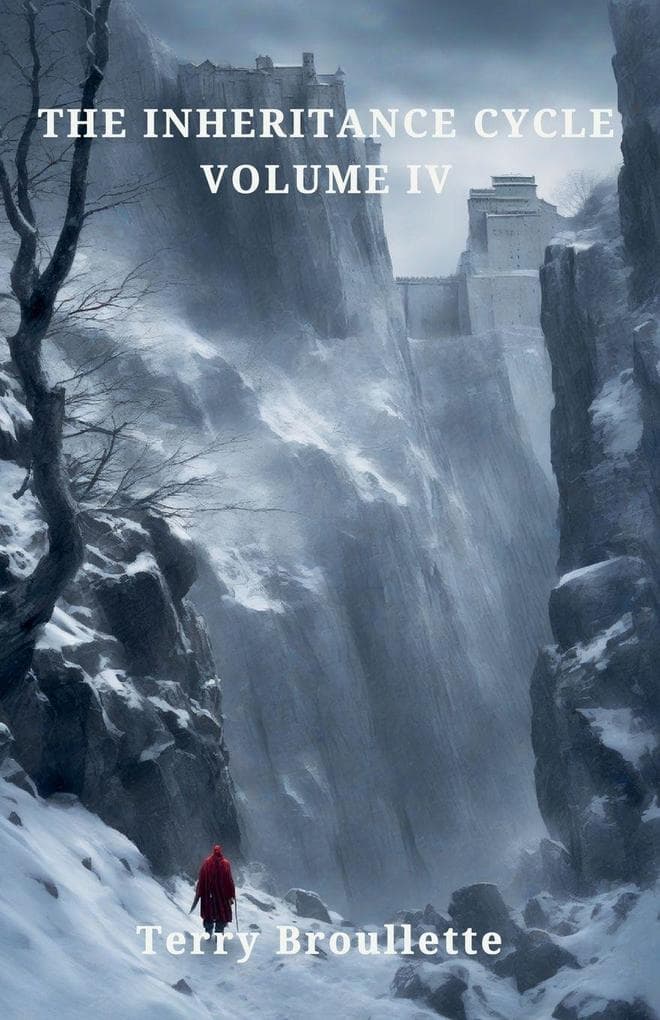
Taschenbuch
Forensic investigator Markus Adler is drawn into a long, methodical inquiry that reaches beneath the surface of Bavaria's oldest estates, where crimes are preserved not in testimony but in stone, lineage, and ritual silence. Each site reveals another layer of a buried system-architectural residues, monastic records, and generational patterns that bind the living to the dead. As Markus and legal archivist Catrina von Dietingen trace these convergences, the investigation becomes less a sequence of cases and more an excavation of the structures that have shaped the region's darkest histories.
When the investigation reaches the heart of the realm, Markus and Catrina confront a widening pattern of civic and territorial responses-watch posts shifting their stance, border stations on alert, and the city gates unsettled under the weight of a truth they can no longer ignore. Within the Convergence, urgent deliberations and rising tensions reveal fractures in the structures that once held the region steady. What began as a contained inquiry now radiates across the land, exposing a system whose silence is beginning to break.
As the evidence is cataloged and the contradictions mapped, Markus and Catrina are forced to reassess the parameters of the inquiry. The patterns emerging from their findings point toward a design that cannot be dismissed as coincidence or decay, and the next phase of the investigation demands a deeper examination of the structures that have shaped these events. What they uncover here becomes the foundation for the steps they must take next.
When the investigation reaches the heart of the realm, Markus and Catrina confront a widening pattern of civic and territorial responses-watch posts shifting their stance, border stations on alert, and the city gates unsettled under the weight of a truth they can no longer ignore. Within the Convergence, urgent deliberations and rising tensions reveal fractures in the structures that once held the region steady. What began as a contained inquiry now radiates across the land, exposing a system whose silence is beginning to break.
As the evidence is cataloged and the contradictions mapped, Markus and Catrina are forced to reassess the parameters of the inquiry. The patterns emerging from their findings point toward a design that cannot be dismissed as coincidence or decay, and the next phase of the investigation demands a deeper examination of the structures that have shaped these events. What they uncover here becomes the foundation for the steps they must take next.