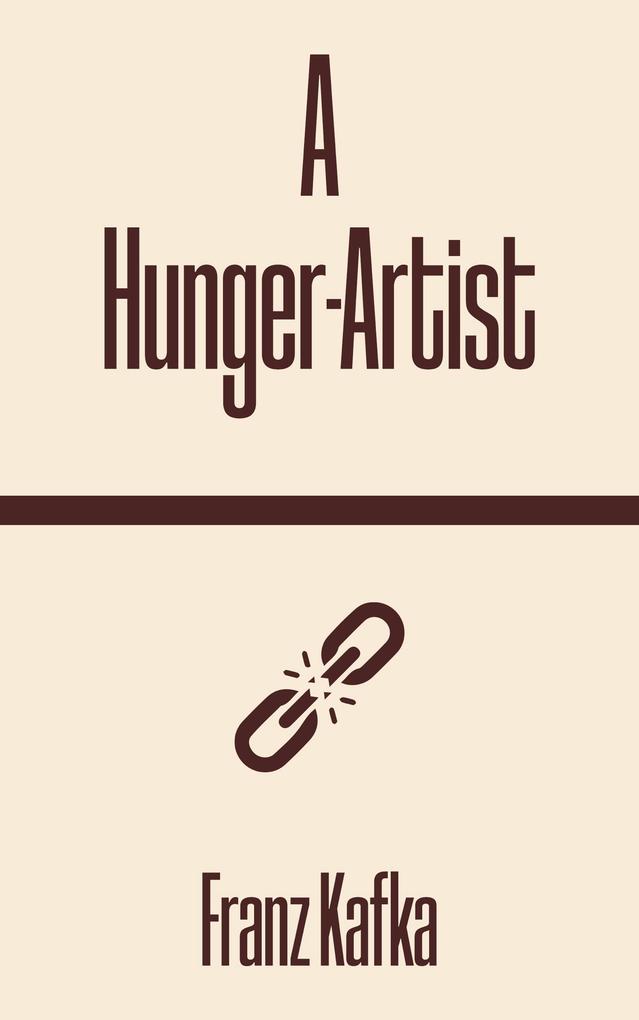
A Hunger-Artist is one of Franz Kafka's most haunting and symbolic short works, a powerful meditation on art, suffering, alienation, and the fragile relationship between the individual and society. Written in Kafka's unmistakable style-quiet, precise, and deeply unsettling-the story explores the life of a professional fasting performer whose art depends entirely on public attention, belief, and admiration.
The narrative follows a hunger artist who dedicates his existence to fasting as a form of performance. Once celebrated as a marvel of discipline and endurance, he is carefully watched by guards and managers to ensure the authenticity of his suffering. Crowds gather to marvel at his self-denial, yet they never truly understand him. Over time, public interest wanes. Society grows impatient with art that demands contemplation rather than spectacle, and the hunger artist finds himself increasingly isolated, misunderstood, and forgotten.
Kafka uses the hunger artist's fading popularity to reflect on the loneliness of the true artist-someone driven by an inner necessity rather than applause or reward. The artist's devotion to his craft is absolute, yet it brings him neither fulfillment nor recognition. His suffering is genuine, but it is reduced to entertainment, suspicion, and ultimately indifference. As the world moves on, the hunger artist continues his fast, trapped in a cycle of self-denial that no longer has meaning for anyone but himself.
At its core, A Hunger-Artist is an exploration of existential despair and the impossibility of being fully understood. Kafka questions whether pure art can survive in a society that demands novelty, comfort, and easy consumption. The story also confronts themes of identity, purpose, and the quiet tragedy of a life devoted to an ideal that the world no longer values.
Both deeply personal and universally resonant, A Hunger-Artist stands as a profound allegory of modern existence. With stark imagery and emotional restraint, Kafka invites readers to confront uncomfortable truths about ambition, recognition, and the cost of living authentically in a world that may never truly see us.