Bücher versandkostenfrei*100 Tage RückgaberechtAbholung in über 100 Filialen











10% Rabatt11 auf Tonieboxen, Figuren & Zubehör mit dem Gutscheincode: TONIE10
Jetzt einlösen
mehr erfahren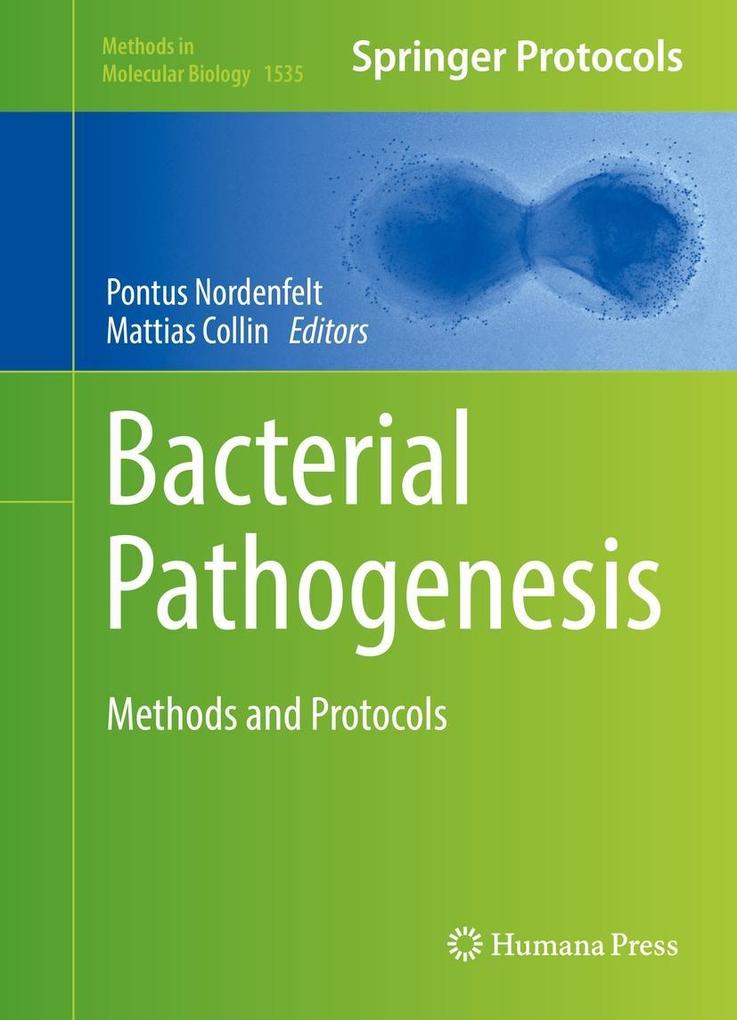
This volume discusses various methods and protocols used for the experimentation of a wide range of bacterial species, such as
Streptococcus pyogenes
,
Staphylococcus aureus
,
Streptococcus pneumonia
,
Listeria monocytogenes
, and
M
ycobacterium marinum
.
Bacterial Pathogens: Methods and Protocols
is divided into 6 parts: Part 1 describes different approaches to identifying and characterizing bacterial effector molecules; Part 2 deals with structural biology of bacterial pathogenesis and how to overcome folding and stability problems with recombinantly expressed proteins; Part 3 details methodology that identifies bacteria in complex communities and how genomes of bacterial pathogens have evolved; Part 4 reflects on the rapid development of advanced imaging techniques that address questions about molecular properties of individual live bacteria, ultrastructure of surfaces, and subcellular localization of bacterial proteins; Part 5 describes methods from in vitro and in vivo modeling of bacterial infections; and Part 6 explores how bacterial pathogens are the true experts of the immune system. Written in the highly successful
Methods in Molecular Biology
series format, chapters include introductions to their respective topics, lists of the necessary materials and reagents, step-by-step, readily reproducible laboratory protocols, and tips on troubleshooting and avoiding known pitfalls.
Cutting-edge and comprehensive,
Bacterial Pathogens: Methods and Protocols
is a valuable resource for anyone who is interested in this fascinating and evolving field.
Inhaltsverzeichnis
Protein-Based Strategies to Identify and Isolate Bacterial Virulence Factors. - Analysis of Bacterial Surface Interactions with Mass Spectrometry-Based Proteomics. - Differential Radial Capillary Action of Ligand Assay (DRaCALA) for High-Throughput Detection of Protein-Metabolite Interactions in Bacteria. - Identifying Bacterial Immune Evasion Proteins using Phage Display. - Competition for Iron between Host and Pathogen: A Structural Case Study on
Helicobacter pylori. -
Common Challenges in Studying the Structure and Function of Bacterial Proteins: Case Studies from
Helicobacter pylori. -
Development of a Single Locus Sequence Typing (SLST) Scheme for Typing Bacterial Species Directly from Complex Communities. - Reconstructing the Ancestral Relationships between Bacterial Pathogen Genomes. - Making Fluorescent Streptococci and Enterococci for Live Imaging. - Computer Vision-Based Image Analysis of Bacteria. - Assessing Vacuolar Escape of
Listeria Monocytogenes. -
Immobilization Techniques of Bacteria for Live Super-Resolution Imaging using Structured Illumination Microscopy. - Negative Staining and Transmission Electron Microscopy of Bacterial Surface Structures. - Detection of Intracellular Proteins by High-Resolution Immunofluorescence Microscopy in
Streptococcus pyogenes. -
Antibody Guided Molecular Imaging of Infective Endocarditis Infection. - The Zebrafish as a Model for Human Bacterial Infections. - Determining Platelet Activation and Aggregation in Response to Bacteria. - Killing Bacteria with Cytotoxic Effector Proteins of Human Killer Immune Cells: Granzymes, Granulysin and Perforin. - In Vitro and In Vivo Biofilm Formation by Pathogenic Streptococci. - Murine
Mycobacterium marinum
Infection as a Model for Tuberculosis. - Generating and Purifying Fab Fragments from Human and Mouse IgG using the Bacterial Enzymes IdeS, SpeB and Kgp. - Measuring Antibody Orientation at the Bacterial Surface. - Towards Clinical use of the IgG Specific Enzymes IdeS and EndoS against Antibody-Mediated Diseases.
Es wurden noch keine Bewertungen abgegeben. Schreiben Sie die erste Bewertung zu "Bacterial Pathogenesis" und helfen Sie damit anderen bei der Kaufentscheidung.