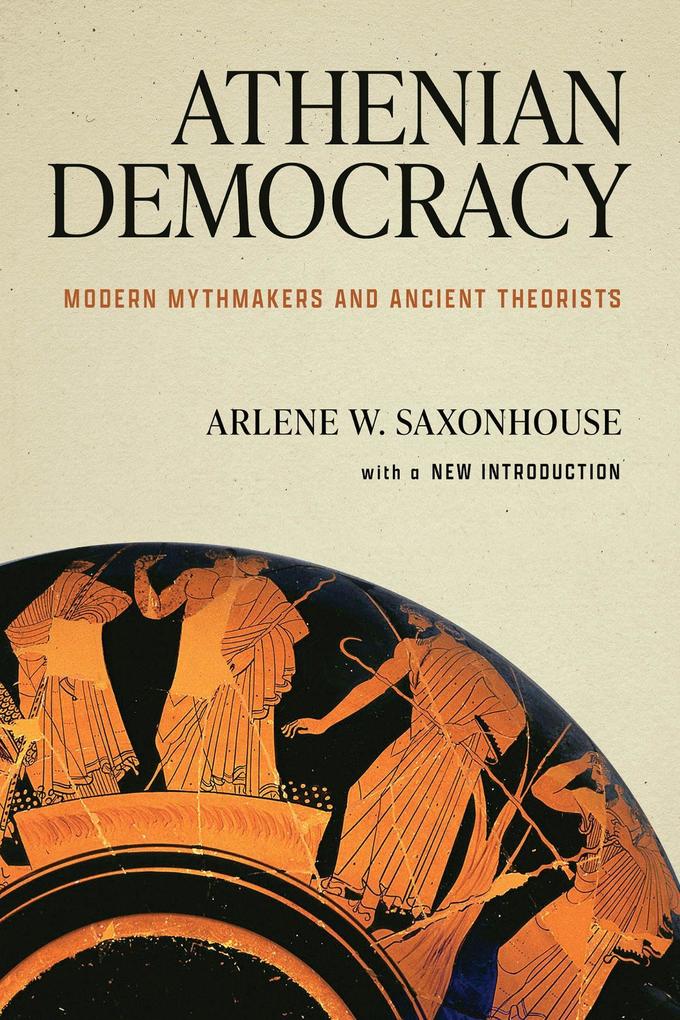
Athenian Democracy provides innovative readings of ancient theorists to reveal both the complexity of democracy's achievements and its limits.
In this classic work, noted political scientist Arlene W. Saxonhouse offers fresh and provocative explorations of ancient political theorists, lending new insights about democracy's foundations and principles. These insights are more relevant than ever in a moment when the viability of democratic regimes is under scrutiny. Saxonhouse provides an in-depth discussion of the modern mythmakers (Hobbes, Paine, Hamilton, Mill, and Arendt, among others) who, in praising or excoriating Athenian democracy, have in fact distorted it to support their own assessments of democracy. She then offers detailed reinterpretations of the writings on democracy of four ancient theorists who had directly experienced life in the first democratic regime: Herodotus, Thucydides, Plato, and Aristotle.
Saxonhouse argues that the mythmaking that often attends our views of Athenian democracy—whether as a flawed, slaveholding regime that fostered factions and oppressed women or as an ideal regime of egalitarian and participatory democracy—blinds us to the deeper understanding of democracies that these ancient theorists can offer.
Inhaltsverzeichnis
Preface
1. The Mythmakers
2. Herodotus, Democracy, and Equality
3. Thucydides, Communal Decision-Making, and the Capacity for Change
4. Plato and the Problematical Gentleness of Democracy
5. Aristotle: Democracy and the Ambiguities of Nature
Epilogue
Notes
Bibliography
Index