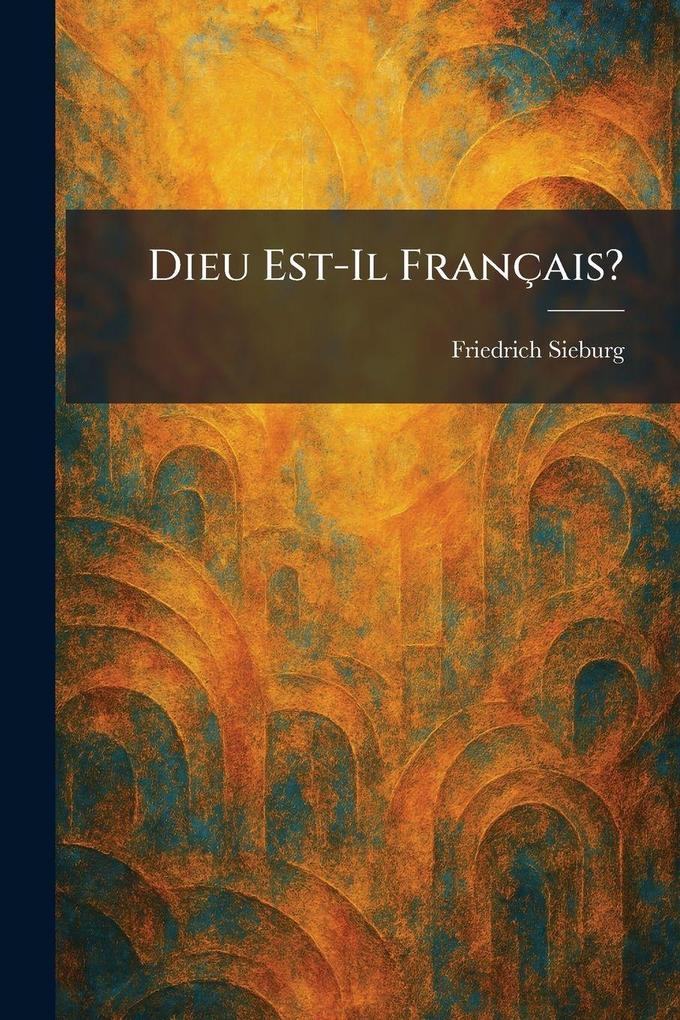
"Dieu Est-Il Français?" est un essai captivant qui plonge au cÅ"ur de l'identité nationale et de la psyché culturelle de la France. Écrit avec une lucidité remarquable, cet ouvrage explore la tension entre l'universalisme français et les réalités sociopolitiques de l'Europe de l'entre-deux-guerres. Friedrich Sieburg y analyse la conviction profonde de la France d'Ãatre la gardienne de la civilisation, examinant comment cette vision influence ses structures sociales, sa politique et sa perception du monde.
À travers des observations aiguisées sur la vie intellectuelle et administrative, l'auteur interroge la notion de destin national et la place de la culture dans la construction d'une hégémonie morale. Ce texte constitue une contribution majeure à la compréhension des relations franco-allemandes et offre une perspective fascinante sur le nationalisme culturel. En posant la question audacieuse du titre, l'ouvrage invite à une réflexion profonde sur ce qui définit une nation et sur la persistance des mythes nationaux dans l'histoire moderne. C'est une Å"uvre essentielle pour quiconque s'intéresse à l'histoire des idées et à l'évolution de la pensée européenne.
This work has been selected by scholars as being culturally important, and is part of the knowledge base of civilization as we know it. This work was reproduced from the original artifact, and remains as true to the original work as possible. Therefore, you may see the original copyright references, library stamps (as most of these works have been housed in our most important libraries around the world), and other notations in the work.
This work is in the public domain in the United States of America, and possibly other nations. Within the United States, you may freely copy and distribute this work, as no entity (individual or corporate) has a copyright on the body of the work.
As a reproduction of a historical artifact, this work may contain missing or blurred pages, poor pictures, errant marks, etc. Scholars believe, and we concur, that this work is important enough to be preserved, reproduced, and made generally available to the public. We appreciate your support of the preservation process, and thank you for being an important part of keeping this knowledge alive and relevant.