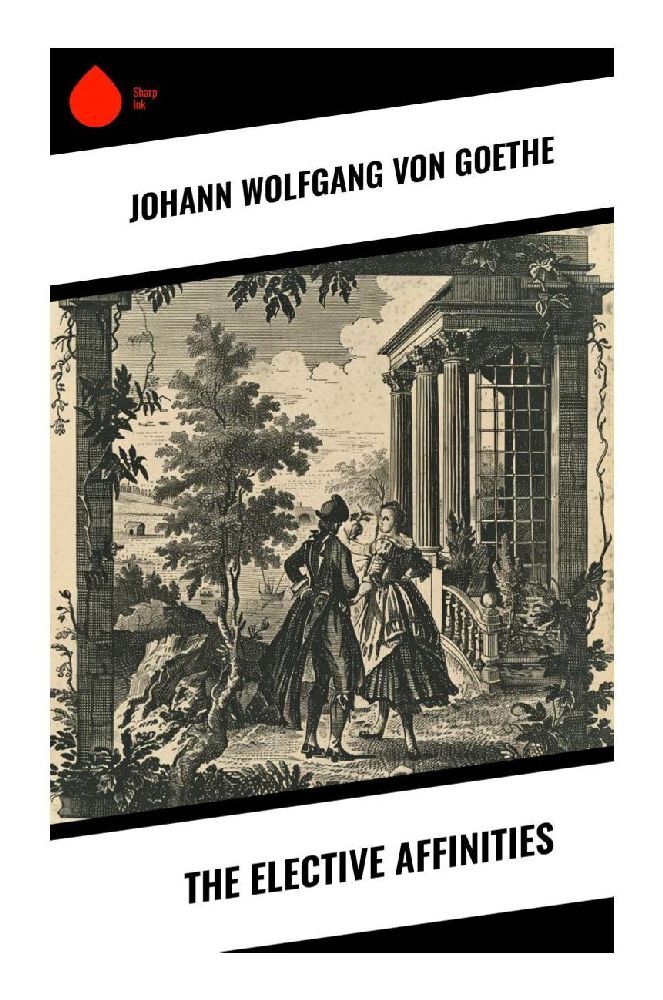
In The Elective Affinities (1809), Johann Wolfgang von Goethe transforms a chemical concept into a searching study of desire, marriage, and moral responsibility. Set within the cultivated world of an aristocratic estate, the novel follows Eduard and Charlotte, whose apparently stable union is unsettled by the arrival of the Captain and the young Ottilie. Goethe's prose is lucid, controlled, and symbolically dense, combining Enlightenment rationality with the emotional intensities of early Romanticism. Its architecture, gardens, and experiments mirror the characters' inner rearrangements, making the book one of the great European novels of form, fate, and ambiguity. Goethe, already celebrated as poet, dramatist, scientist, and statesman, brought to the novel his lifelong fascination with natural law, aesthetics, and human self-formation. His scientific interests, especially in morphology and the analogies between nature and human conduct, inform the book's central metaphor. Yet Goethe's mature skepticism prevents any simple reduction of ethics to chemistry. This novel is recommended to readers interested in psychologically exact fiction, philosophical narrative, and the origins of the modern European novel. It rewards slow reading, inviting reflection on whether passion liberates, destroys, or merely reveals the hidden structures of social life.