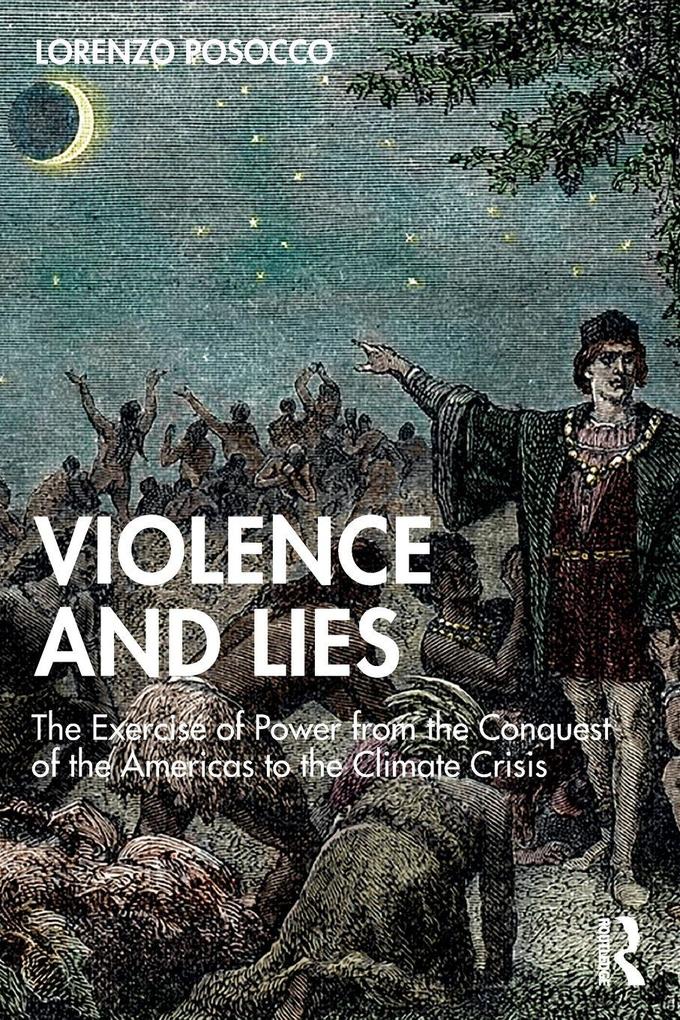
Violence and Lies examines the relationship between violence and deception, from the Conquest of the Americas to the ongoing climate crisis. It revisits major historical turning points - including European colonialism in Africa, the Holocaust, 9/11 and the War on Terror, and the Rape of Nanjing - through the lens of lies and deception.
The book not only challenges traditional interpretations by offering fresh insights and categorising various forms of deception but also advances a theory of power. Existing theories have often overlooked or downplayed the role of lies and deception, placing disproportionate emphasis on violence, ideology, and other non-violent means. Deception has frequently been treated as secondary - an anecdotal companion to violence rather than a force in its own right. Posocco argues that lies and deception are as significant as violence, and that they remain insufficiently theorised and categorised. By illuminating overlooked aspects of historical and modern power struggles, this book invites readers to critically reassess conventional narratives about domination.
A valuable resource for students and scholars of political science, sociology, global history, and the history of power, Violence and Lies also appeals more broadly to readers interested in contemporary global issues.
Inhaltsverzeichnis
Acknowledgements
Introduction
1. Power: Violence, Lies and Deception
2. The Conquest of the Americas: Guns, Germs, Steel... and Lies
3. Lies, Deception, and Violence in the Scramble for Africa
4. The Holocaust: Violence, Lies and Deception
5. 9/11 and The War on Terror: Violence, Lies and Deception
6. The Rape of Nanjing
7. Climate Change-Climate Obstruction: Power, violence, lies and deception
8. The Long-Run: Lies, Deception and Violence as Methods of Power
Bibliography
Index