Bücher versandkostenfrei*100 Tage Rückgaberecht***Abholung in über 100 Filialen
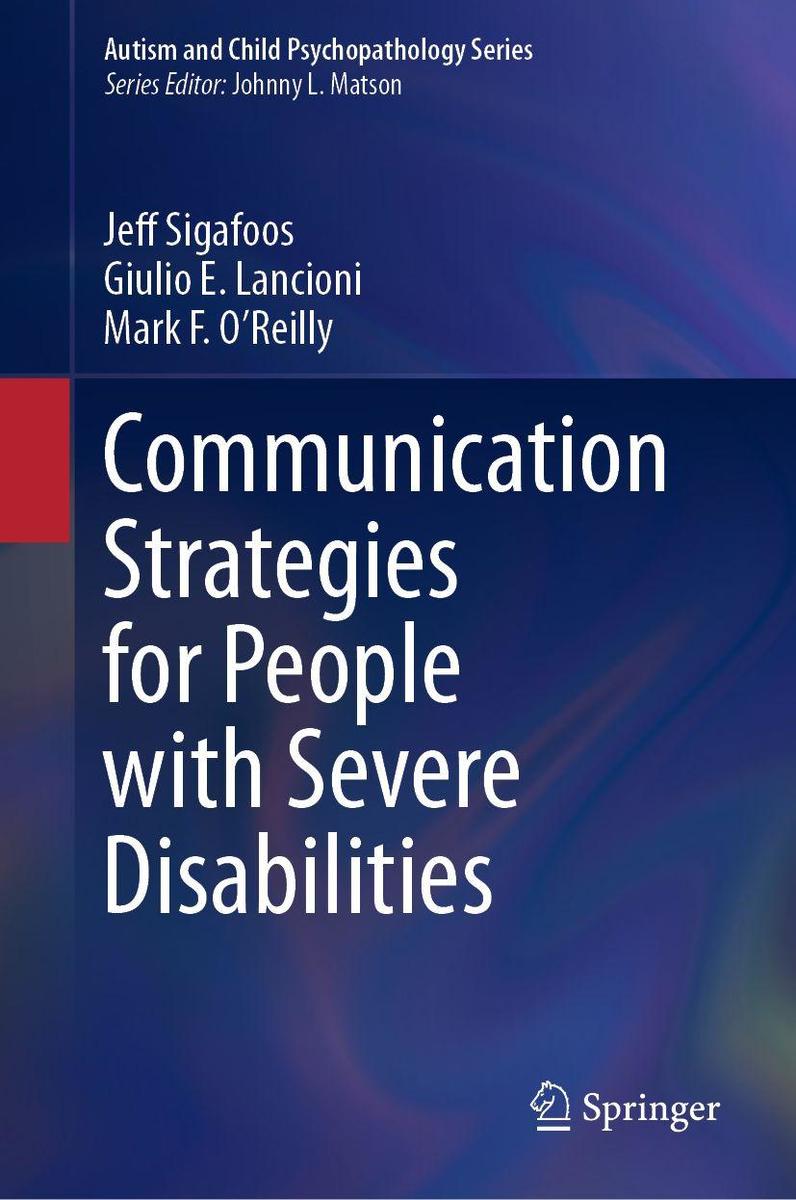
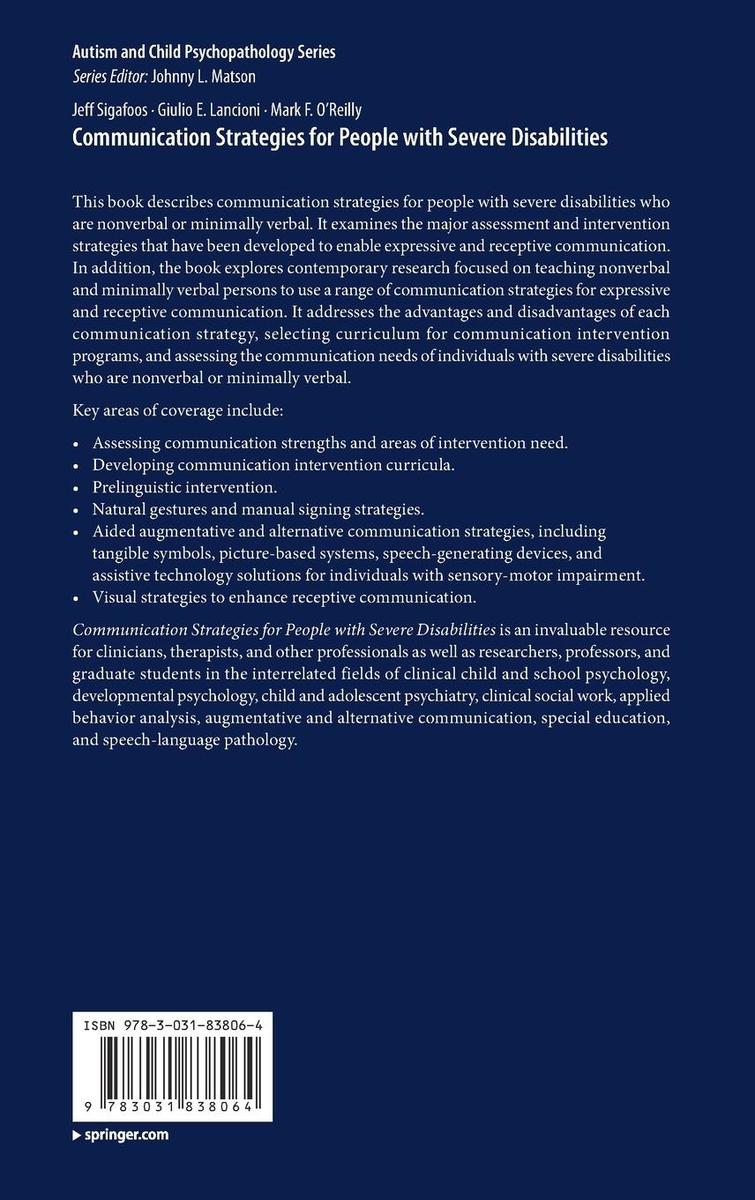
This book describes communication strategies for people with severe disabilities who are nonverbal or minimally verbal. It examines the major assessment and intervention strategies that have been developed to enable expressive and receptive communication. In addition, the book explores contemporary research focused on teaching nonverbal and minimally verbal persons to use a range of communication strategies for expressive and receptive communication. It addresses the advantages and disadvantages of each communication strategy, selecting curriculum for communication intervention programs, and assessing the communication needs of individuals with severe disabilities who are nonverbal or minimally verbal.
Key areas of coverage include:
Communication Strategies for People with Severe Disabilities is an invaluable resource for clinicians, therapists, and other professionals as well as researchers, professors, and graduate students in the interrelated fields of clinical child and school psychology, developmental psychology, child and adolescent psychiatry, clinical social work, applied behavior analysis, augmentative and alternative communication, special education, and speech-language pathology.
Inhaltsverzeichnis
Chapter 1 Describing Severe Disability. - Chapter 2 Communication Impairment and Assessment. - Chapter 3 Prelinguistic Communication. - Chapter 4 Enhancing Natural Gestures. - Chapter 5 Teaching Manual Signs. - Chapter 6 Use of Tangible Symbols. - Chapter 7 Effective Communication Using Picture Exchange. - Chapter 8 Communicating with Speech-Generating Devices. - Chapter 9 Assistive Technology Solutions for Enabling People with Intellectual and Motor or Sensory-Motor Disabilities to Access Communication Events. - Chapter 10 Visual Strategies for Receptive Communication.
Es wurden noch keine Bewertungen abgegeben. Schreiben Sie die erste Bewertung zu "Communication Strategies for People with Severe Disabilities" und helfen Sie damit anderen bei der Kaufentscheidung.