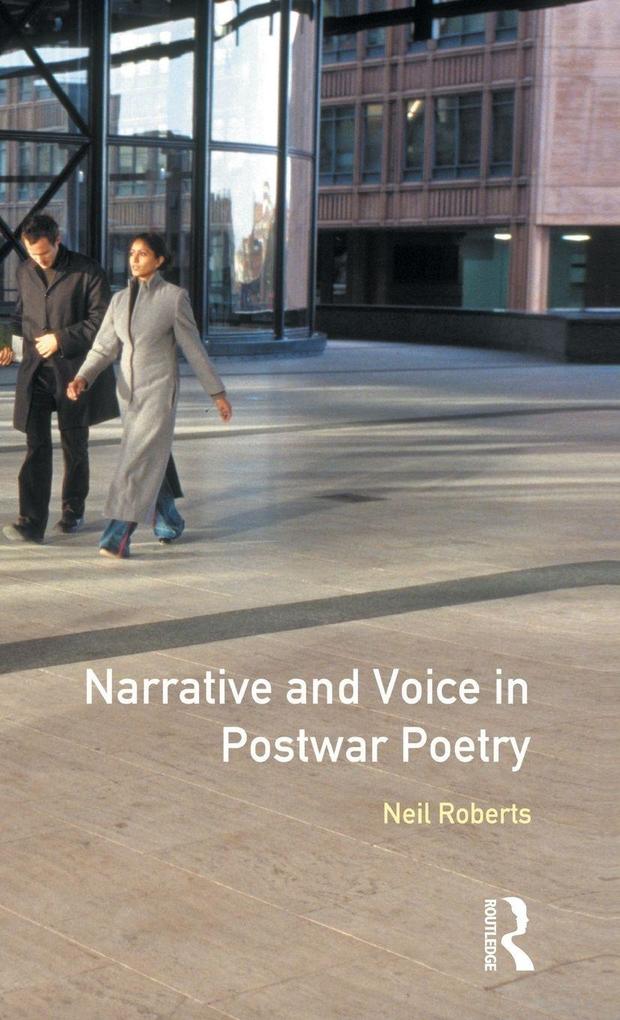
Poetry in English since the Second World War has produced a number of highly original narrative works, as various as Derek Walcott's Omeros, Ted Hughes's Gaudete and Anne Stevenson's Correspondences. At the same time, poetry in general has been permeated by narrative features, particularly those linguistic characteristics that Mickhail Bakhtin considered peculiar to the novel, and which he termed 'dialogic'. This book examines the narrative and dialogic elements in a range of poets from the immediate post-war years to the contemporary, from Britain, America, Ireland, Australia and the Caribbean, and from novel-like narratives to personal lyrics. Its unifying theme is the way in which these poets, of such contrasting styles and background, respond to and creatively adapt the language-worlds, and hence the social worlds in which they live.
Inhaltsverzeichnis
Introduction; Chapter One: Art and Populism: Larkin from the Margins; Chapter Two: Constructs for the Inarticulate: The Late Poems of Sylvia Plath; Chapter Three: Crow in its Time: Trickster Mythology and Black Comedy; Chapter Four: Hughes, Narrative and Lyric: an Analysis of Gaudete; Chapter Five: Against Confessionalism: Anne Stevenson's Correspondences; Chapter Six: Utterance and Resistance: Geoffrey Hill; Chapter Seven: 'The Mulatto of Style': Derek Walcott and Hybridity; Chapter Eight: Les Murray and the Vernacular Republic; Chapter Nine: Language, Nationality and Gender: Seamus Heaney and an English Reader; Chapter Ten: Peter Redgrove: Composition as Transaction; Chapter Eleven: Tony Harrison: Author and Subject in The School of Eloquence and v.; Chapter Twelve: 'Tother keeps chaingin is VOICE': Heteroglossia in Peter Reading; Chapter Thirteen: Carol Ann Duffy: Outsideness and Nostalgia