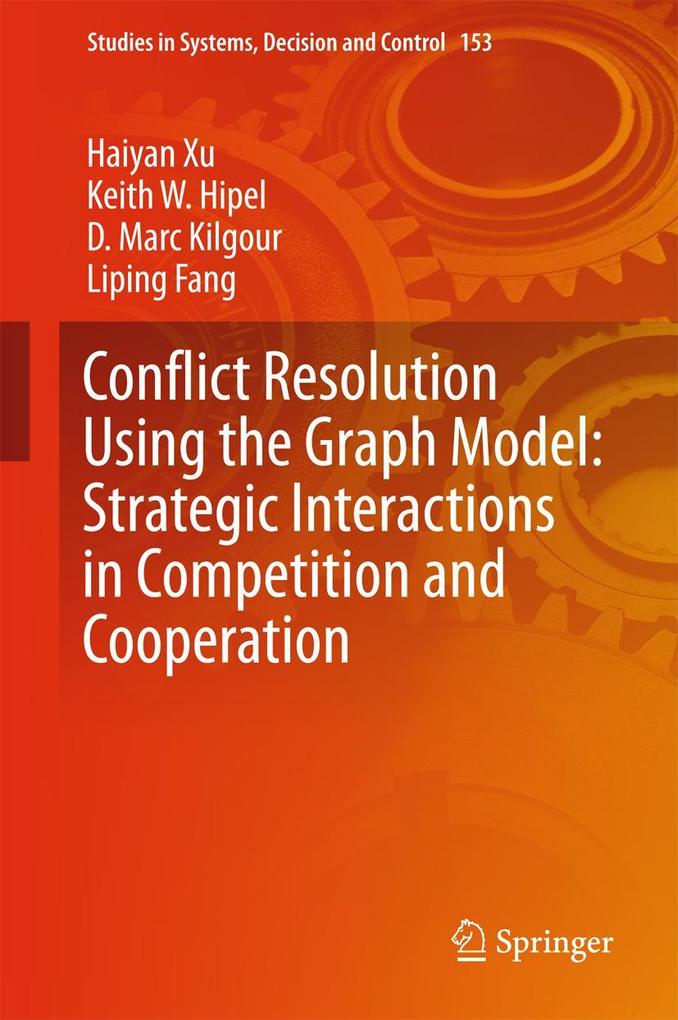
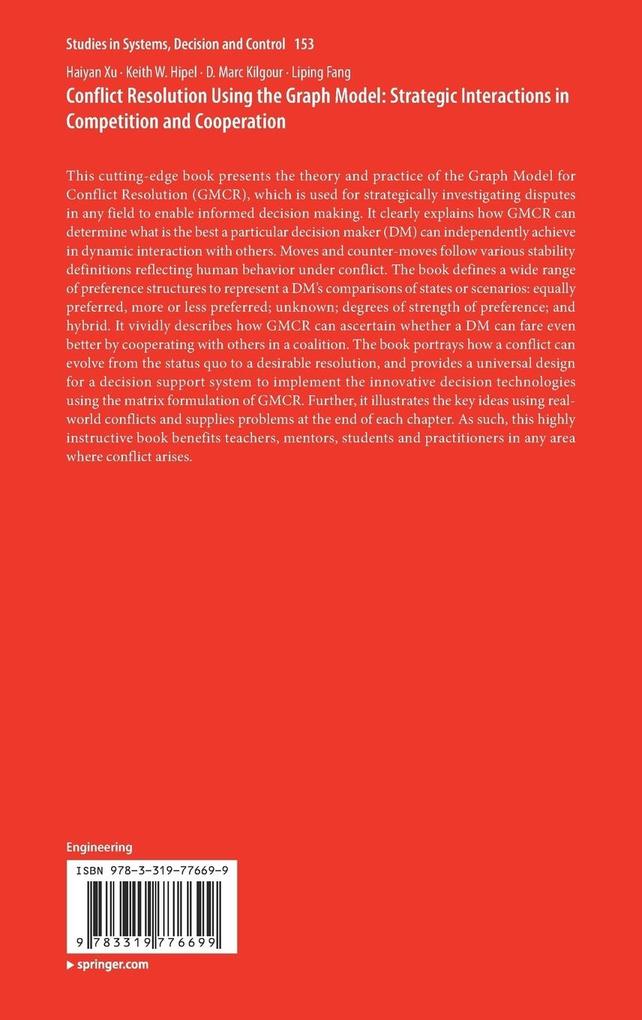
This cutting-edge book presents the theory and practice of the Graph Model for Conflict Resolution (GMCR), which is used for strategically investigating disputes in any field to enable informed decision making. It clearly explains how GMCR can determine what is the best a particular decision maker (DM) can independently achieve in dynamic interaction with others. Moves and counter-moves follow various stability definitions reflecting human behavior under conflict. The book defines a wide range of preference structures to represent a DM's comparisons of states or scenarios: equally preferred, more or less preferred; unknown; degrees of strength of preference; and hybrid. It vividly describes how GMCR can ascertain whether a DM can fare even better by cooperating with others in a coalition. The book portrays how a conflict can evolve from the status quo to a desirable resolution, and provides a universal design for a decision support system to implement the innovative decision technologies using the matrix formulation of GMCR. Further, it illustrates the key ideas using real-world conflicts and supplies problems at the end of each chapter. As such, this highly instructive book benefits teachers, mentors, students and practitioners in any area where conflict arises.
Inhaltsverzeichnis
Con ict Resolution in Practice. - Decision Making in Perspective. - Con ict Models in Graph Form. - Stability De nitions: Simple Preference. - Stability De nitions: Unknown Preference. - Stability De nitions: Degrees of Preference. - Stability De nitions: Hybrid Preference. - Coalitional Stabilities. - Follow-up Analysis: Con ict Evolution. - Design of a Decision Support System for Con ict Resolution.