Bücher versandkostenfrei*100 Tage RückgaberechtAbholung in über 100 Filialen
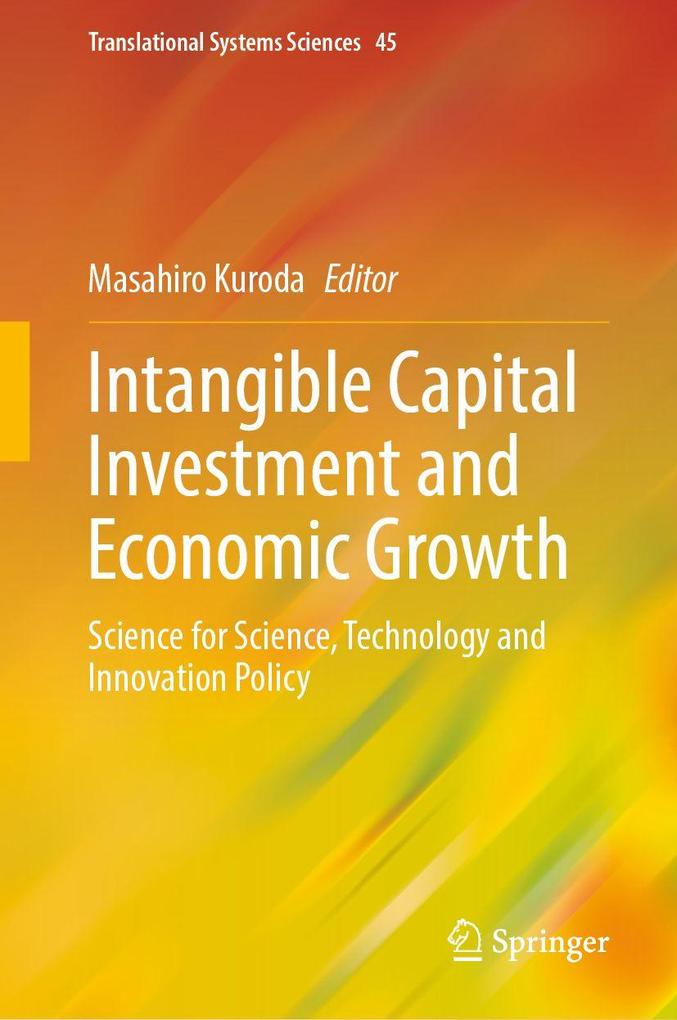
This book explores the concept of Science for REdesigning Science, Technology and Innovation Policy (SciREX) as those policies are conducted in a scientific manner. It is the first attempt to measure the effects of science and technology policies and as well as industrial policies on total factor productivity (TFP). The evolution of science and technology in the twentieth century, known as Big Science, led to the realization of an economic structure of mass production and consumption through the expansion of tangible fixed assets. However, since the latter half of the twentieth century, the trend has shifted toward intangible intellectual assets, such as research and development and information processing, resulting in a significant structural change in the economy and society. The book scientifically investigates the effects of this intangible fixed asset investment on the economic structure, evaluates the direction of structural change, and determines the merits and demerits ofits policies based on the state of science and society in the trans-scientific era. To understand the impact of scientific knowledge and information on the economy and society, the book measures the volume of services of intellectual and information assets as intangible fixed assets and their spillover effects among industrial sectors. By measuring the TFP growth rate of industries, the economic spillover effects of intangible fixed asset outcomes are evaluated to measure the impact of science and technology and industrial policy as a scientific approach to science and technology policy.
Inhaltsverzeichnis
Chapter 1. Towards Science for Science and Innovation Policy (Kuroda). - Chapter 2. Departure from Collapse: The Rebirth and Development of the Japanese Economy in the Post World War II (Kuroda). - Chapter 3. High Growth after No More Postwar in Japan (Kuroda). - Chapter 4. Measuring the Spillover Effect of Total Factor Productivity by R& D and ICT Activities - Theoretical Framework of Capitalization of R& D (Kuroda). - Chapter 5. - Long-Term Technology Choice Behaviour and Cost Function Formulation: Measurement of the Trans-log Cost Function (Kuroda). - Chapter 6. Evaluation: Results of Expanded Investment in Intangible Assets in Japan: The Decline of Technological Efficiency in the 21st Century and the Analysis of the Factors (Kuroda and Huang). - Chapter 7. Science for Science, Technology, and Innovation Policy and the Development of Economy and Society (Kuroda and Huang).
Es wurden noch keine Bewertungen abgegeben. Schreiben Sie die erste Bewertung zu "Intangible Capital Investment and Economic Growth" und helfen Sie damit anderen bei der Kaufentscheidung.