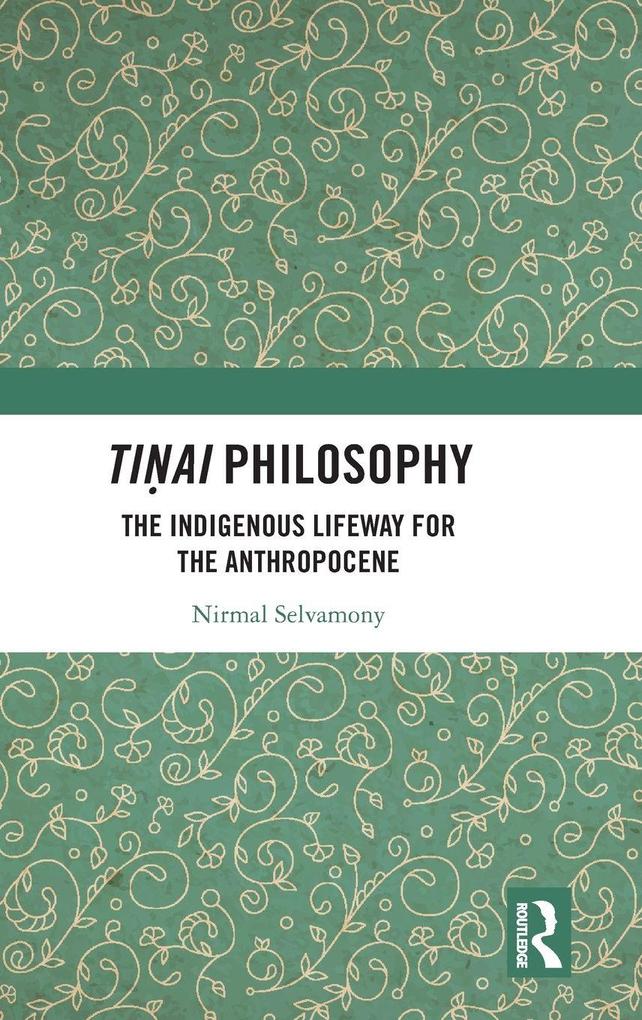
This book refigures an ancient indigenous way of knowing and being practiced by the Tamil people for present times, by tracing the origin and structure of this philosophical tradition that has been continually evolving since the pre-Holocene epoch. ti¿ai is both the world of this philosophy and a way of living harmoniously with all beings of this world.
This book illustrates how this philosophy was practiced both within and outside the home. It demonstrates how k¿¿ci ("vision," the Tamil word for philosophy), the philosophical practice of living out ti¿ai, is a kind of action that is at once rational, emotional, and volitional, and how this praxis is guided by the ultimate value of äpu or love. It reconceptualizes the discipline of philosophy itself by exploring the semantic horizons of k¿¿ci without falling back on the western idea of this discipline and thus earns its indispensable niche.
Comprehensive and insightful, this volume will be of interest to students and scholars of the humanities and social sciences, spanning fields such as philosophy, Indian philosophy, history, place studies, indigenous studies, Tamil studies, Indian studies, South Asian studies, and studies of the Global South.
Inhaltsverzeichnis
Acknowledgements ix
Introduction 1
1 Indigenous Tamil lifeway (ti¿ai lifeway) 34
2 The name of the field 69
3 Exclusive philosophy (akakk¿¿ci) 91
4 Inclusive philosophy (püakk¿¿ci) 114
Conclusion 155
Bibliography 161
Glossary 177
Index 182