Bücher versandkostenfrei*100 Tage RückgaberechtAbholung in über 100 Filialen
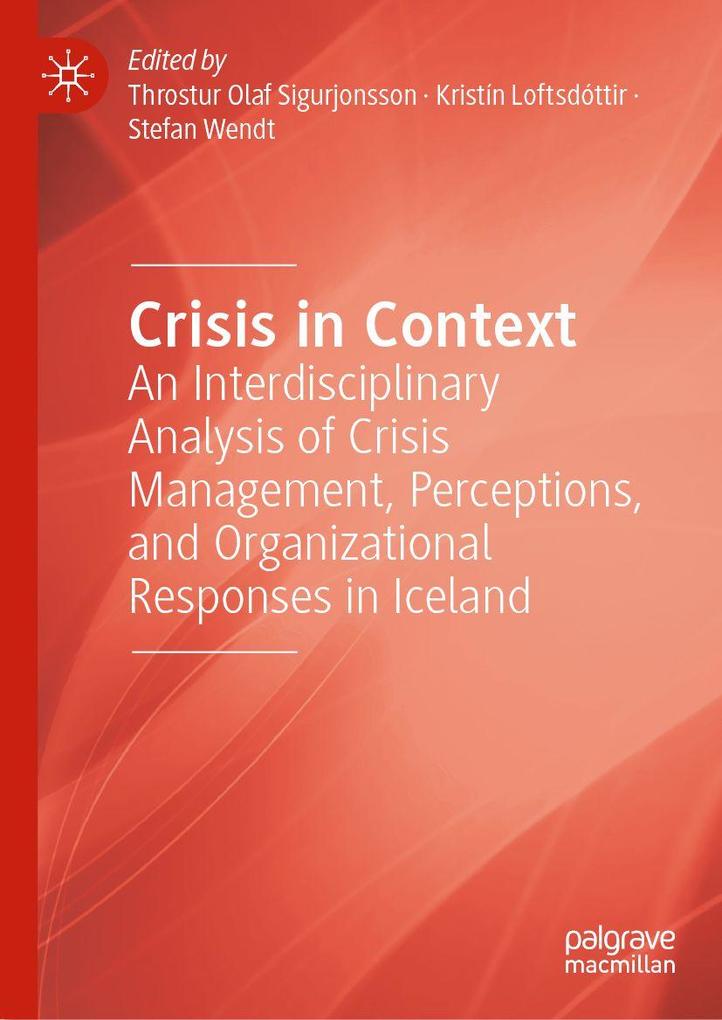
Since the global financial crisis of 2008, there have been increasing frequency of global crises, including large-scale conflicts, the COVID-19 pandemic, the environmental crisis, and a general worsening of geopolitical tensions and structural inequality. Despite the global impact of these intersecting crises, the way in which they have been understood and responded to has been far from uniform. This edited volume focuses on the concept of crisis through an interdisciplinary lens, analysing the term and comparing how it is being applied in different disciplines and across different sectors of society.
The volume focuses on cases of crisis from Iceland, a small country with a high visibility in certain crises. This scope allows the contributors to cover a broad section of the Icelandic economy, government and society, offering a uniquely rounded analysis and extensive global comparison. It will be of great interest to scholars and students across different disciplines in social sciences, such as business, anthropology, sociology, change management, as well as practitioners and policymakers in the business of resilience and strategic crisis management.
Inhaltsverzeichnis
Chapter 1: How to prepare for the impossible: The level of crisis preparedness among households in Iceland. - Chapter 2: Housing crisis in Iceland: a multi-layered phenomenon. - Chapter 3: Navigating Individual Crisis and Stress: Women' s Workplace Challenges in Iceland s Gender-Equal Landscape. - Chapter 4: Icesave and the Financial Crisis: Legality, Sovereignty, and Diplomacy Under International Pressure in Iceland s 2008 Collapse. - Chapter 5: Crisis and Protest in Post-Collapse Iceland: From Political Opportunity to Positive Feedback. - Chapter 6: Icelanders and Disasters: Economic Perspectives on Risk, Resilience, and Recovery from Iceland. - Chapter 7: People with Disabilities in Iceland: Access to Housing and Data. - Chapter 8: Making Illegal People: Following the European Path of Crisis Creation. - Chapter 9: The Ripple Effects of The Icelandic Financial Crisis: Social Fabric and Public Health in Post-2008 Iceland. - Chapter 10: From Passive to Present: The Role of Institutional Investors in Corporate Governance During Crisis Situations. - Chapter 11: The systemic risk of COVID-19 in small remote communities a case study from Iceland. - Chapter 12: Building Resilience in Volatile Environments: The Case of the Blue Lagoon in Iceland.
Es wurden noch keine Bewertungen abgegeben. Schreiben Sie die erste Bewertung zu "Crisis in Context" und helfen Sie damit anderen bei der Kaufentscheidung.