Bücher versandkostenfrei*100 Tage RückgaberechtAbholung in über 100 Filialen
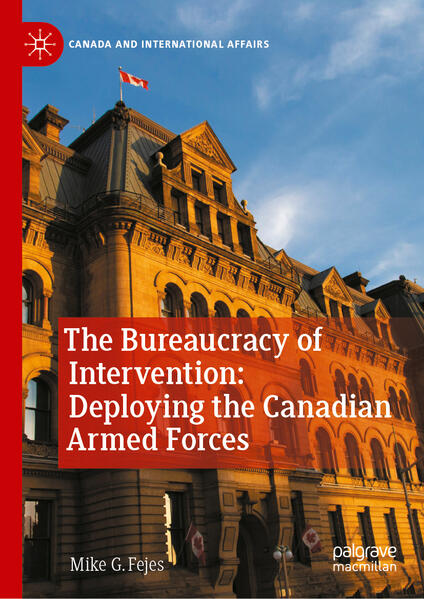
This book advances the contemporary intervention literature by focusing on Canadian Armed Forces deployments and the role of the public service. The author focuses on three recent post-Afghanistan deployments, including Iraq, Ukraine, Mali, and one non-deployment to Colombia, seeking to explain why the Canadian government varies in deploying the armed forces abroad, specifically the time required to announce a deployment and the deployment s composition/size. The book seeks to examine the civil-military relationship in Canada and highlight aspects of the principal-agent relationship by focusing on how the federal bureaucracy defines and shapes military commitments. These four case studies look past the implementation stage of the decision-making process to explain how federal bureaucracies impact policy through agenda setting and policy formulation, specifically in regards to the use of armed force abroad.
Inhaltsverzeichnis
Chapter 1 - Introduction: Assumptions, Importance, and Definitions. - Chapter 2 - Explaining Canadian Interventions. - Chapter 3 OPERATION IMPACT: IRAQ - Deploying a relatively large contingent quickly (850 personnel deployed in 4-5 weeks). - Chapter 4 OPERATION UNIFIER: UKRAINE - Deploying a relatively small contingent slowly (200 personnel deployed in 11 weeks). - Chapter 5 - OPERATION PRESENCE: MALI - Deploying a relatively small contingent even slower (250 personnel deployed in 19 weeks). - Chapter 6 - OPERATION CHALLENGE: COLOMBIA - A very slow non-deployment decision (0 Personnel in 39 weeks). - Chapter 7 - Conclusion: The Role of Bureaucracy in Intervention.
Es wurden noch keine Bewertungen abgegeben. Schreiben Sie die erste Bewertung zu "The Bureaucracy of Intervention: Deploying the Canadian Armed Forces" und helfen Sie damit anderen bei der Kaufentscheidung.