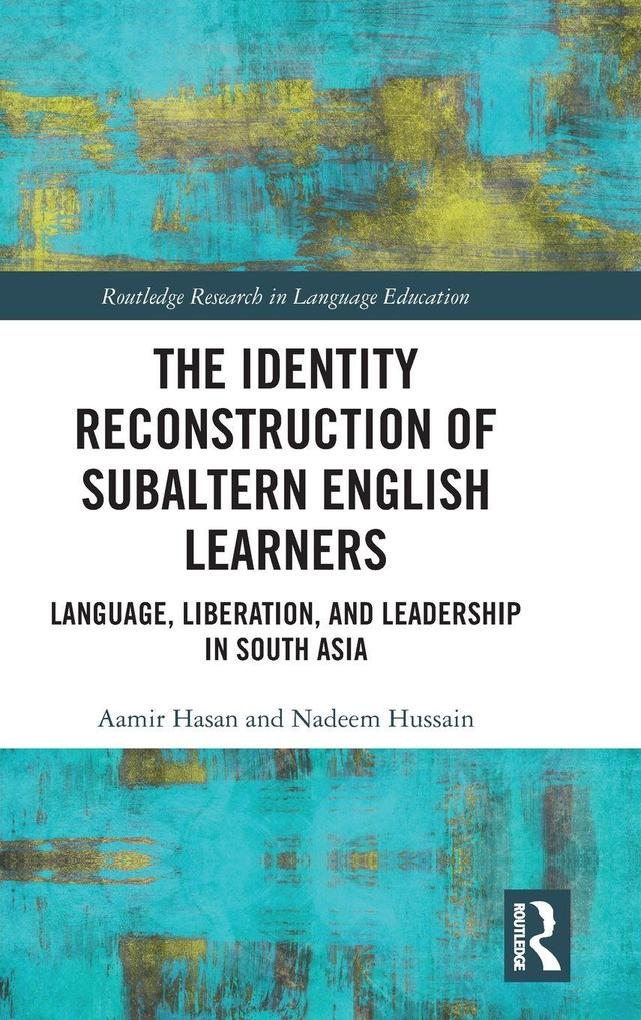
This book presents a qualitative study of language learners in the Global South who overcame insurmountable odds to acquire the English language. Drawing on rich data from successful non-elite, or Subaltern, learners, it explores the intersection of leadership development and English acquisition, documenting their identity reconstruction and metamorphosis.
The authors provide a detailed overview of the position of English in the modern world as well as the unique historical relationship between the language and South Asia. They then examine the determination of marginalized individuals to acquire English and introduce the term Liberative Motivation to define their desire to break out of restrictive class/caste-based silos. Filling a crucial gap in the narrative of English in South Asia, they explore the influence that English acquisition has on Subaltern identity, leadership, and self-esteem. The participants' stories are deeply moving, demonstrating that for the Subaltern, dignity, respect, inclusion, and an educated identity are near impossibilities without knowing English. The authors propose the 'Subaltern Self-Determination and English Acquisition Framework' to encapsulate the interplay of factors in the Subaltern's journey toward English, and they argue that the denial of English education borders on the denial of a basic human right in our present reality.
A unique account of the learning experiences of Subaltern populations, this book is an essential read for scholars, researchers, and postgraduate students with interests in Subaltern studies, English language acquisition, identity, and leadership, and human rights.
Inhaltsverzeichnis
Introduction Chapter 1: The Imperviousness of English Chapter 2: South Asia's Tryst with English
Chapter 3: Liberative Motivation - The Desire to be Fully Human Chapter 4: Farewell to Living without Identity Chapter 5: When the Subaltern Speaks in English, she is Heard! Chapter 6: English-the Intersection when Elites and Non-Elites meet as Equals Chapter 7: Has English Become a Basic Human Right?