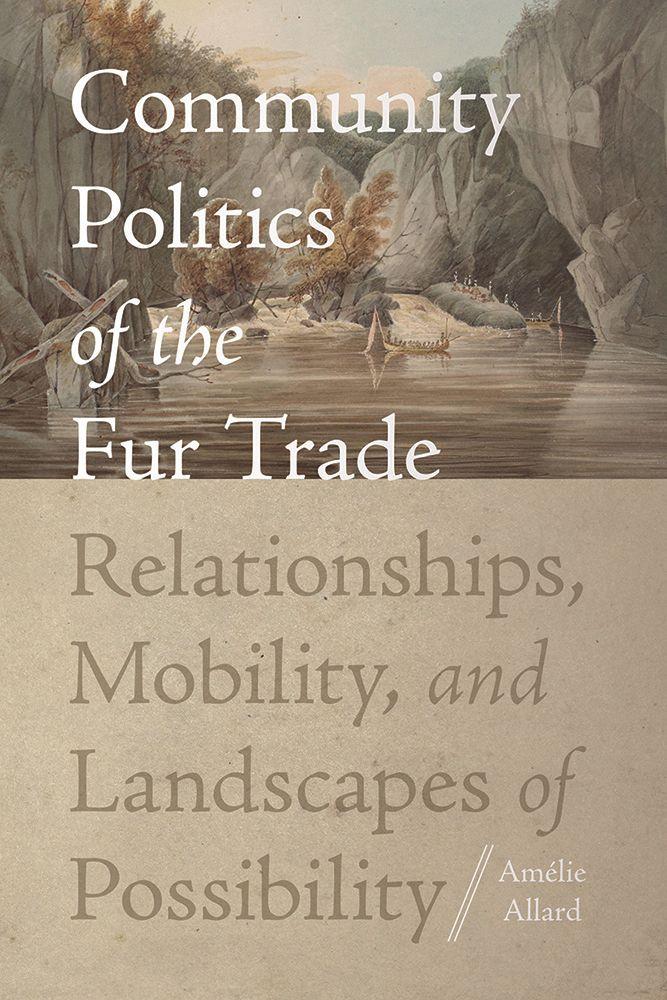
Reinterpreting the Great Lakes fur trade as a dynamic interplay of ambition, alliances, and evolving identities
The North American fur trade was more than a system of economic exchange. In this book, Amélie Allard examines the Great Lakes region as a dynamic landscape where European traders and Indigenous peoples negotiated clashing perspectives with the common purpose of trade and establishing relationships. Allard portrays the interactions between these groups as community politics and community building, highlighting both cooperation and contentious power imbalances during the late eighteenth and early nineteenth centuries.
Drawing on archaeological evidence including trading posts and wrecked canoes and historical documents such as traders’ journals and memoirs, Allard unravels the social complexities of this world. She demonstrates how processes of place-making—through foodways, the built environment, and place-naming—as well as both waterborne and overland mobility shaped the identities and relationships of Euro-Canadian, métis, and Indigenous peoples. Community Politics of the Fur Trade challenges traditional narratives of colonialism by suggesting that for many Indigenous peoples such as the Anishinaabeg and Dakota, the fur trade era represented a moment of possibility rather than an inevitable path to subjugation.
Inhaltsverzeichnis
List of Figures
Acknowledgments
List of Abbreviations
1. Introduction
2. Historical Context: Understanding the Mobile World of the Eighteenth-Century Fur Trade
3. Community Politics, Place-Making, and Architectural Practices
4. Feeding the Crew: Relationships, Inclusivity, and Difference around Food-Related Practices and Discourse
5. Relationships with the Landscape: Land-Based Mobility and Place-Making (and Claiming)
6. Navigating Relationships while En Voyage on Water
7. Gendered Mobilities and Ideals of Masculinity
8. Conclusion
Appendix I. Artifact Distribution (Specimen Count) by Unit and Shovel Test Pit
Appendix II. Taxonomic Representation from the Réaume Leaf River Post Faunal Assemblage
Glossary of French and Anishinaabe Terms
Notes
References
Index