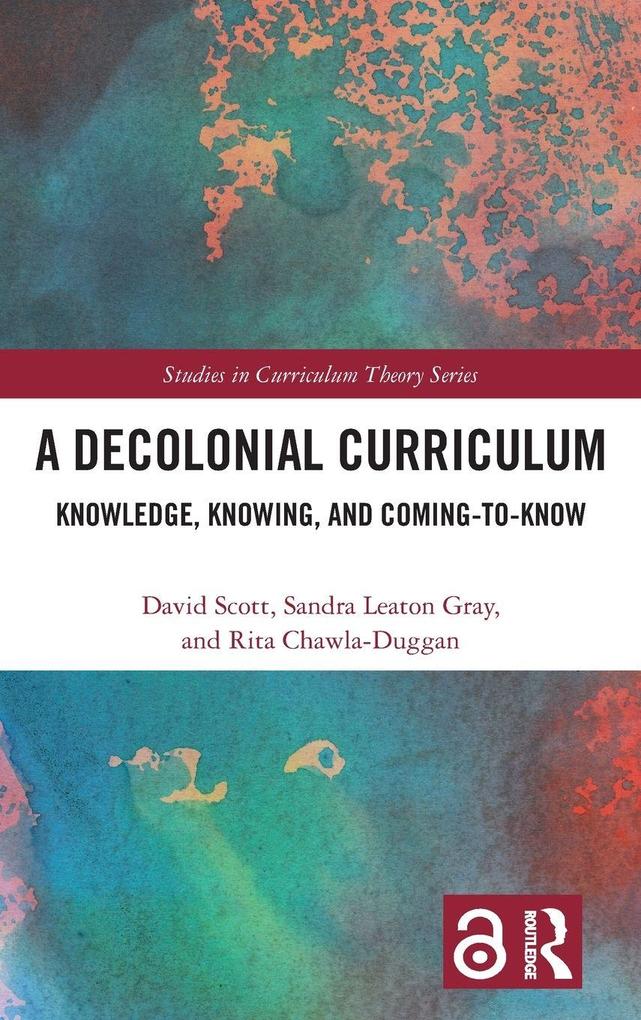
A Decolonial Curriculum advances the claim that a decolonial and transcolonial curriculum must be grounded in a substantive account of what human beings do, have done and might yet do.
It proposes 12 fundamental domains of human life - knowing, communicating, genealogising, positioning, cognising, understanding, enhancing, philosophising, acting in the world, valuing, embodying and creating - as generative elements for curriculum design. Taken together, these domains offer a non-reductive framework that resists the false dichotomy between 'colonial' epistemologies and 'indigenous' ways of knowing and being. Rather than opposing knowledge traditions, the book argues for a pedagogy that is dialogical, embodied and reflexive, while recognising the limits of decolonial critique alone. It therefore advances a transcolonial pedagogy oriented towards hybrid, relational and productive epistemic formations, capable of preparing learners for materially and historically interconnected futures.
It is an essential read for academics, educators, policy-makers and anyone engaged in designing, developing and rethinking curriculum.
Inhaltsverzeichnis
Foreword Preface Chapter 1:Curriculum, Knowledge, Learning and Ethics Chapter 2:A Decolonial Pedagogy Chapter 3:Knowledge and Coming-to-Know Chapter 4:Modalities of Communication Chapter 5:Temporalities and Histories Chapter 6:Spatialities and Positionings Chapter 7:Scientific Knowledge and Pedagogy Chapter 8:Hermeneutics and Interpretation Chapter 9:Technologies and Enhancements Chapter 10:Philosophising and a No-Thought Pedagogy - Krishnamurti and Aurobindo Chapter 11:Ethics and Learning Chapter 12:Valorisations and Valuings Chapter 13:Embodied Knowledge and Pedagogy Chapter 14:Performance and Creativity Chapter 15:A Decolonial and Transcolonial Curriculum Chapter 16:Institutionality, Textuality, Reflexivity and Authorship References Index