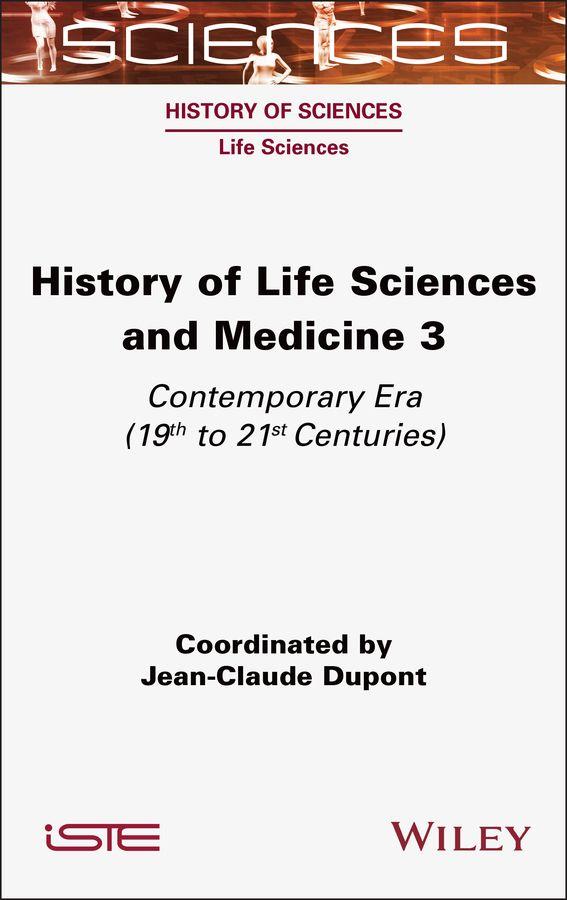
Inhaltsverzeichnis
Presentation of Field "History of Science" xi
Jean-Claude DUPONT
Introduction: The Conceptual Scope of Life xiii
Jean-Claude DUPONT Chapter
1. Theories for the Origin of Life in the 19th and 20th Centuries 1
Stéphane TIRARD
1.1. Introduction 1
1.2. Lamarck: animalization and permanent spontaneous generation 1
1.3. Pasteur and the abandonment of spontaneous generation 3
1.4. Darwin: lack of evidence and discreet comments 5
1.5. Abiogenesis: the transition from non-life to life 6
1.6. Panspermia: eternal and universal life 7
1.7. Oparin and Haldane: hypothetical scenarios for life's emergence on Earth 8
1.8. Prebiotic chemistry: an experimental model of primitive Earth 10
1.9. The RNA world and the first carriers of genetic information 12
1.10. The origins of life on Earth: a historical problem with no record and the need for cross-disciplinary approaches 13
1.11. Extraterrestrial life and the development of astrobiology 15
1.12. Conclusion 17
1.13. References 17
Chapter 2. The Reception of Evolutionary Theory in France 21
Olivier PERRU
2.1. Introduction 21
2.2. Darwin and biological evolution 23
2.3. The reception of Darwin's theory of evolution in 19th century France 26
2.4. Henri Bergson and Pierre Teilhard de Chardin 30
2.5. The theory of evolution and French biologists in the early 20th century 33
2.6. The possibility of rejecting evolution 36
2.7. Conclusion 37
2.8. References 37
Chapter 3. The History of the Ecosystem Concept 39
Julien DELORD
3.1. Introduction 39
3.2. The origins of the term "ecosystem" 40
3.3. From the ecosystem concept to systems ecology 43
3.4. Ecosystem ecology as "big science" 45
3.5. The IBP's mixed record in developing ecosystem ecology 45
3.6. Shortcomings of the Odumian ecosystem paradigm 46
3.7. The contemporary ecosystem paradigm: "the analysis of (self-organized) ecological networks" 48
3.8. Disturbance ecology 50
3.9. Biodiversity and ecosystem functioning 50
3.10. Conclusion and outlook 52
3.11. References 56
Chapter 4. The Cell: The Basic Structural and Functional Unit of Living Organisms 63
François DUCHESNEAU
4.1. Introduction 63
4.2. Schwann's cell theory 66
4.3. Holistic reinterpretations of Schwann's theory 70
4.4. Elementary organisms and protoplasmic individualities 77
4.5. Mitosis and meiosis revealed 80
4.6. The relativization and complexification of cell theory 84
4.7. References 86
Chapter 5. The History of the Metabolism Concept: From Its Beginnings to Maturity 89
Jean-Claude DUPONT
5.1. Introduction 89
5.2. The emergence of the metabolism concept 90
5.3. Biochemistry: the science of metabolism 97
5.4. The metabolism's golden age: cellular respiration 103
5.5. Conclusion: the evolution of molecular dissection methods and the revival of the metabolism 113
5.6. References 116
Chapter 6. The History of the Gene 125
Antonine NICOGLOU
6.1. Introduction 125
6.2. The prehistory of the gene 127
6.3. The gene in Mendelian genetics: the probabilistic gene 131
6.4. The gene in formal genetics: the statistical gene 137
6.5. The gene in molecular biology: the gene in DNA nucleotides 140
6.6. The gene and its surroundings: the genome 143
6.7. Conclusion: no longer "life's destiny", the gene as the "future of biology" 146
6.8. References 147
Chapter 7. Microcosm, Type and Individuation: Understanding Animal Development 151
Ghyslain BOLDUC
7.1. Introduction: development as the backbone of biological thought 151
7.2. The establishment of embryology as an autonomous and central morphological science 153
7.3. Darwinian reform of developmental history 156
7.4. The birth of experimental embryology 159
7.5. The rise of experimental embryology: gradients, organizers and fields 161
7.6. From embryology to developmental biology 164
7.7. Conclusion: questioning development through evolution, variation and individuality 174
7.8. References 176
Chapter 8. A Conceptual History of Immunology 183
Alfred I. TAUBER
8.1. Introduction 183
8.2. Historical antecedents 184
8.3. Two visions of immunity 186
8.4. The immune self 188
8.5. Immunology and ecology 191
8.6. Systems biology 194
8.7. Conclusion: on identity 196
8.8. References 198
Chapter 9. Human Brains: Representations, Explorations and Stimulations 203
Mathilde LANCELOT
9.1. Introduction: the brain as a timeless object of research 203
9.2. Opening up the brain: explorations, motivations and instruments 205
9.3. Stimulating the brain: electricity, mapping and implants 212
9.4. Conclusion: the brain as a "social phenomenon" 216
9.5. References 218
Chapter 10. Modern Medicine and the Sciences: A History of Ruptures 223
Mathieu ARMINJON
10.1. Introduction: two ruptures 223
10.2. The history of medical rationality as told by key events 225
10.3. Historiographical rupture and the medical revolution 234
10.4. Conclusion: a critical history of medical rationality 242
10.5. References 244
List of Authors 249
Index of Things 251
Index of Names 255
Summary of Volume 1 263
Summary of Volume 2 269