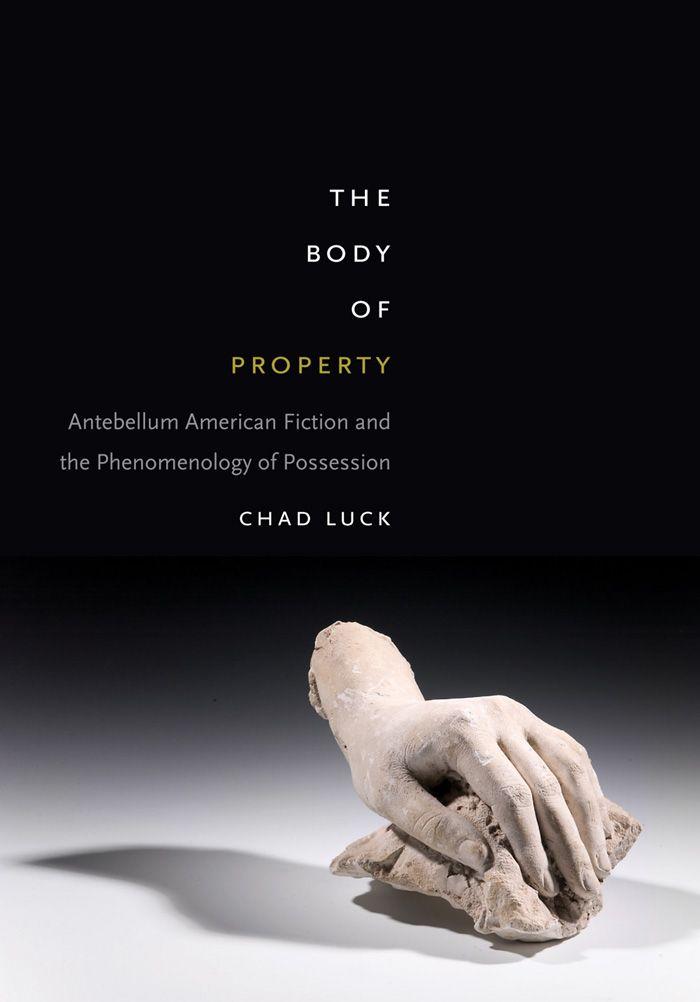
What does it mean to own something? How does a thing become mine? Liberal philosophy since John Locke has championed the salutary effects of private property but has avoided the more difficult questions of property's ontology. Chad Luck argues that antebellum American literature is obsessed with precisely these questions.
Reading slave narratives, gothic romances, city-mystery novels, and a range of other property narratives, Luck unearths a wide-ranging literary effort to understand the nature of ownership, the phenomenology of possession. In these antebellum texts, ownership is not an abstract legal form but a lived relation, a dynamic of embodiment emerging within specific cultural spaces-a disputed frontier, a city agitated by class conflict.
Luck challenges accounts that map property practice along a trajectory of abstraction and "virtualization." The book also reorients recent Americanist work in emotion and affect by detailing a broader phenomenology of ownership, one extending beyond emotion to such sensory experiences as touch, taste, and vision. This productive blend of phenomenology and history uncovers deep-seated anxieties-and enthusiasms-about property across antebellum culture.
Inhaltsverzeichnis
Acknowledgements
Introduction - Pierson v. Post and the Literary Origins of American Property
American Literature and the Problem of Property
Property in Antebellum Culture
A Phenomenology of Property
The Space of Property
Chapter One - Walking the Property: Ownership, Space, and the Body in Motion in Edgar Huntly
Condillac's Statue and the Primacy of Touch
Touching on the Other: Bodily Frontiers and the Production of Space
Walking the Property: Mobility and the Appropriation of Space
Chapter Two - Eating Dwelling Gagging: Hawthorne, Stoddard and the Phenomenology of Possession
Possession without Acquisition: Eating, Enjoyment, and the
"Beginning of Property"
Home Bodies: Domestic Space and Possession Proper
Mother's Milk: Private Property and the Feminine Economy of the Gift
Chapter Three - Anxieties of Ownership: Debt, Entitlement and the Plantation Romance
Southern Discomfort: Debt in the Slaveholding South
Owning and Owing: Woodcraft and the Phenomenology of Debt
Slave Narrative and the Senses of Entitlement
The Structure of the Debt: Swallow Barn and the Space of the Plantation
Chapter Four - Feeling at a Loss: Theft and Affect in George Lippard
A Culture of Theft
Distress Signals: Theft, Body, Affect
Kleptophobia and the Architecture of Loss
Invasion of the Body Snatchers: The Market in the Grave
Epilogue - Wisconsin, 2004: Racial Violence and the Bodies of Property
Notes
Works Cited