Charles Dickens (1812-1870) stands at the structural center of the English-language novel: no library's classics holdings are complete without him, and few authors so reliably move a shelf. He invented the serialized social novel as a mass form, and his fingerprints are on nearly everything that followed - the multiplot Victorian novel, the reforming journalist-novelist, the character name that enters ordinary speech (Scrooge, Micawber, Pecksniff). David Copperfield, his most autobiographical book, is also his hinge work: it is where the orphaned-child plots of his early novels mature into the first-person psychological portraiture that later writers, from George Eliot to James Joyce, would build on. Dickens called it his favorite of his own books, and generations of critics have agreed it rewards that judgment.
His canonical standing has never depended on comfort. Dickens wrote as a former child laborer who never stopped being angry about what industrial England did to children, debtors, and the poor, and that anger is load-bearing in the fiction, not decorative. A modern collection that shelves him only as "classic English literature" undersells him: he is also primary testimony to nineteenth-century child labor, the debtors' prison system, and the workhouse, written by someone who survived them. Patrons doing social history, not just literature, have reason to reach for him.
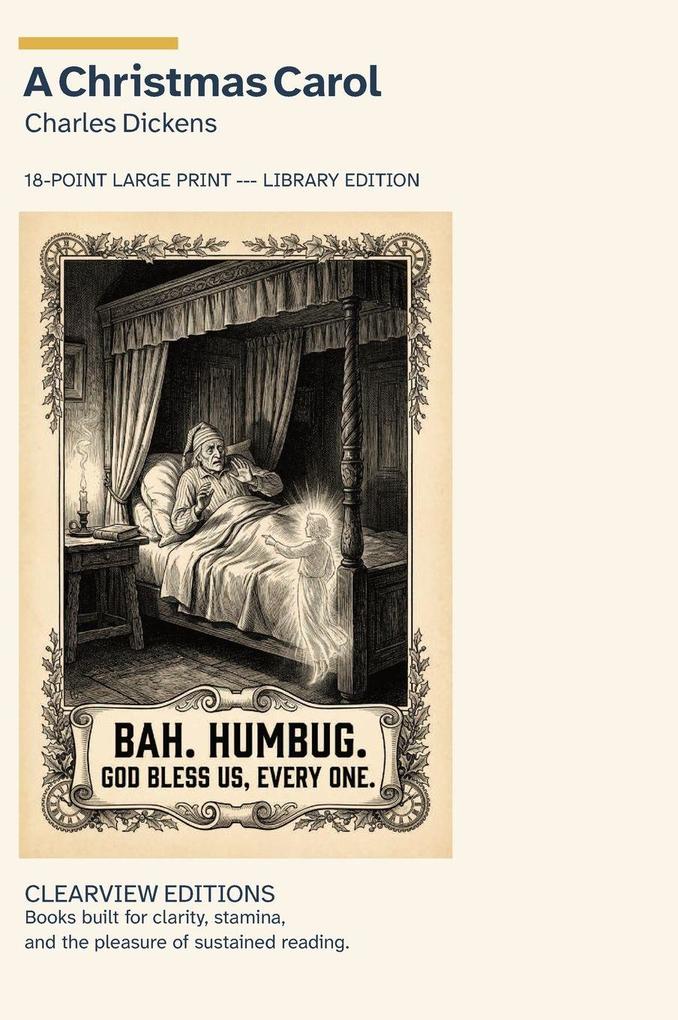
The appeal to readers is unusually durable across age and reading level. Dickens is funny in a way many canonical authors are not - broadly, verbally, at the level of names and set-pieces - and that humor has kept him readable to teenagers and adults alike for over 150 years. This Clearview Editions large-print printing removes the one real barrier that keeps some patrons, especially older readers and those with low vision, from a text this long: the type. At 18-point Atkinson Hyperlegible Next, ragged-right, with no word-division, David Copperfield becomes accessible to the exact population most likely to want unhurried, sustained reading - without asking the library to buy an abridgment.