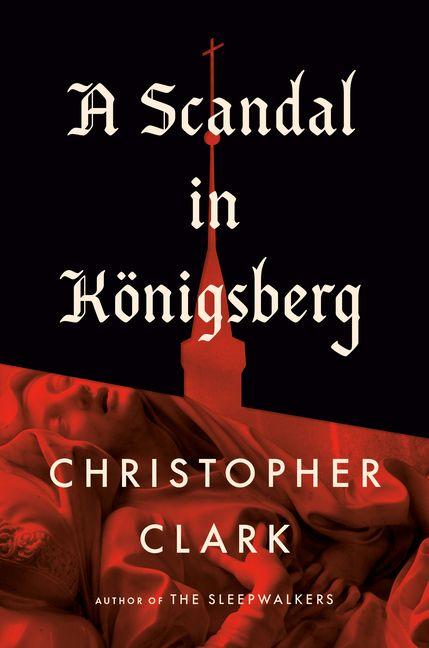
Named a Best Book of the Year by The Times (London) <p/>As told by one of our greatest historians, the story of the scandal that took down two Lutheran preachers in the heart of nineteenth-century Prussia--a chamber piece of cultish esotericism, pseudoscience, and political resistance that conjures up Europe at the end of the age of reason and presages our current age of misinformation <p/>In 1835, Johannes Ebel and Georg Heinrich Diestel were tried for having started a cult. Worse: It was a cult that encouraged scandalous sexual behavior in women, including the daughters of prestigious Prussian families--causing the deaths of two young women from sexual exhaustion. The trial would absorb and polarize the city of Königsberg for half a decade and ruin the lives and careers of its defendants, despite their eventual legal exoneration. The historical moment it encapsulates--a Europe reeling from the triumph and horror of a new industrial, imperial era, struggling to decide which principles will reign in the aftermath of Enlightenment reason--is a fable for our present time of political, social, and existential disquiet. <p/>The great Cambridge historian Christopher Clark--known for The Sleepwalkers, his monumental, defining study of the causes of the First World War--came across the files containing this story three decades ago; it has been swirling in his mind ever since. In gripping, narrative prose, Clark immerses us in a Königsberg scarred by the horrors of the Napoleonic Wars, where Immanuel Kant had recently inaugurated the theory of consciousness that completely reshaped humanity's understanding of itself--but where the distinction between reason and fanaticism was now up for grabs. A Scandal in Königsberg is a European history in exquisite miniature--and a peerless lesson in the theological and philosophical debates that animated the Western world at one of its great moments of transformation. <p/>Rich and provocative, A Scandal in Königsberg articulates an unsettling antecedent for our most fiercely litigated contemporary questions of sexual identity, freedom of thought, and who gets to decide what constitutes the truth.