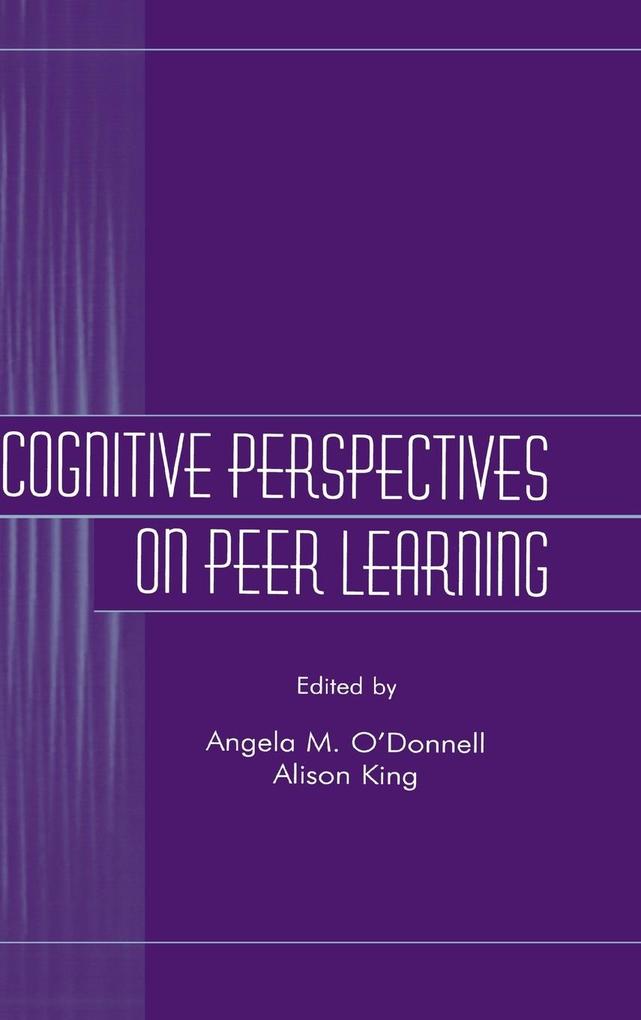
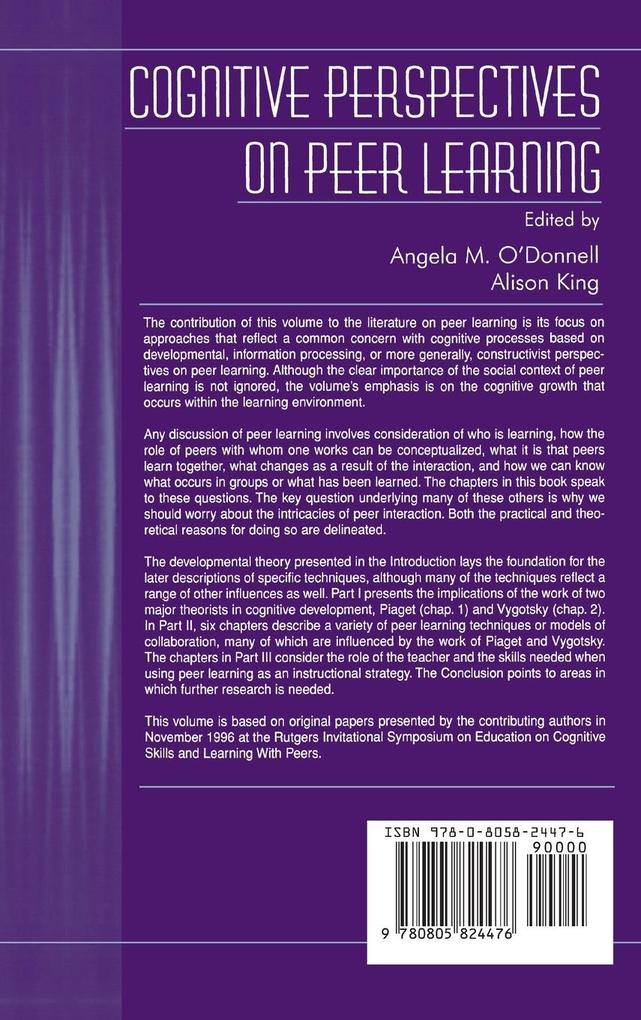
The contribution of this book to the literature on peer learning is its focus on approaches to peer learning that are concerned with its underlying cognitive processes.
Inhaltsverzeichnis
Contents: L. C. Wilkinson, Series Foreword. A. M. O'Donnell, A. King, Introduction. Part I:Cognitive Development Bases of Peer Learning: Overview. R. De Lisi, S. L. Golbeck, Implications of Piagetian Theory for Peer Learning. D. M. Hogan, J. R. H. Tudge, Implications of Vygotsky's Theory for Peer Learning. Part II:Cognitive-Elaborative Approaches to Peer Learning: Overview. N. K. Person, A. G. Graesser, Evolution of Discourse During Cross-Age Tutoring. A King, Discourse Patterns for Mediating Peer Learning. N. M. Webb, S. Farivar, Developing Productive Group Interaction in Middle School Mathematics. A. S. Palinscar, L. R. Herrenkohl, Designing Collaborative Contexts: Lessons From Three Research Programs. A. M. O'Donnell, Structuring Dyadic Interaction Through Scripted Cooperation. S. J. Derry, A Fish Called Peer Learning: Searching for Common Themes. Part III:Implications of Peer Learning for Teaching and Teacher Education: Overview. M. A. Cooper, Classroom Choices From a Cognitive Perspective on Peer Learning. M. S. Meloth, P. D. Deering, The Role of the Teacher in Promoting Cognitive Processing During Collaborative Learning. A. W. Hoy, M. Tschannen-Moran, Implications of Cognitive Approaches to Peer Learning for Teacher Education. T. Almog, R. Hertz-Lazarowitz, Teachers as Peer Learners: Professional Development in an Advanced Computer Learning Environment. A. M. O'Donnell, A. King, Concluding Remarks.