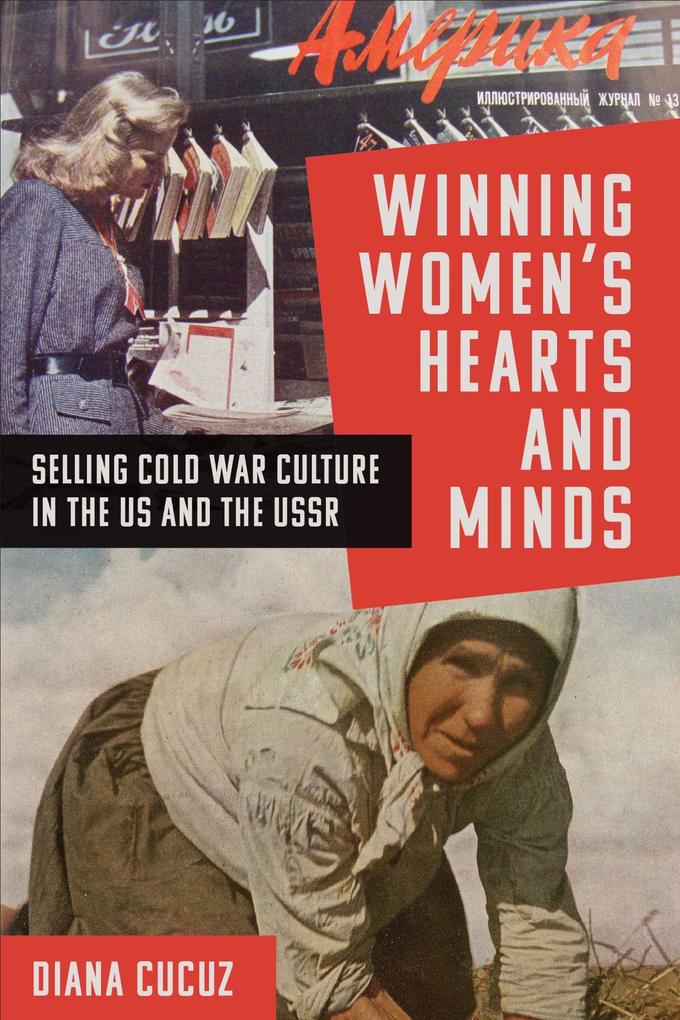
Throughout the Cold War, Soviet citizens had limited access to US life and culture. Amerika, a glossy Russian-language magazine similar to Life, provided a rare exception. Produced by the United States Information Agency (USIA), America’s first peacetime propaganda organization, Amerika was used to influence the Soviet public and convince women in particular that an American-style consumer culture and conservative gender norms could better their lives. Winning Women’s Hearts and Minds relies on USIA archives, issues of Amerika, and American women’s magazines such as the Ladies’ Home Journal to show how, during the postwar period, USIA officials deployed idealized images of American women as happy, fulfilled, and feminine wives, mothers, and homemakers.
This study analyses how Amerika was used to appeal to Sovietwomen. Portrayed in the US media as "babushkas," they were considered unfeminine, overworked, and deprived of consumer goods and services by a repressive regime. Diana Cucuz provides a gendered analysis of the USIA and of Amerika, whose propaganda campaign relied heavily on postwar conservative gender norms and images of domestic contentment to convey positive messages about the American way of life in the hopes of undermining the Soviet regime. Winning Women’s Hearts and Minds sheds light on the significance of women, gender, and consumption to international politics during the Cold War.
Inhaltsverzeichnis
Introduction: Why Women, Cold War Cultural Diplomacy, and Amerika?
Part One: Shaping Women, Gender, and the Communist Threat through the Ladies’ Home Journal
1. The "Modern Woman": The "Special Privileges" of American Womanhood in the Ladies’ Home Journal
2. The "Babushka": The "Special Hardships" of Russian Womanhood in the Ladies’ Home Journal
Part Two: Selling Women, Gender, and Consumer Culture through Amerika
3. Selling the American Way Abroad: The Beginnings of Cold War Cultural Diplomacy in the Soviet Union
4. Modeling the American Dream: Fashion and Femininity in Amerika
5. Living the American Dream: The Happy Homemaker in Amerika
6. Amerika, the USSR, and a Woman’s Proper Place in the Sixties
Conclusion: Assessing Amerika’s Effectiveness: Soviet Promises for the Future and Its Failures
Bibliography