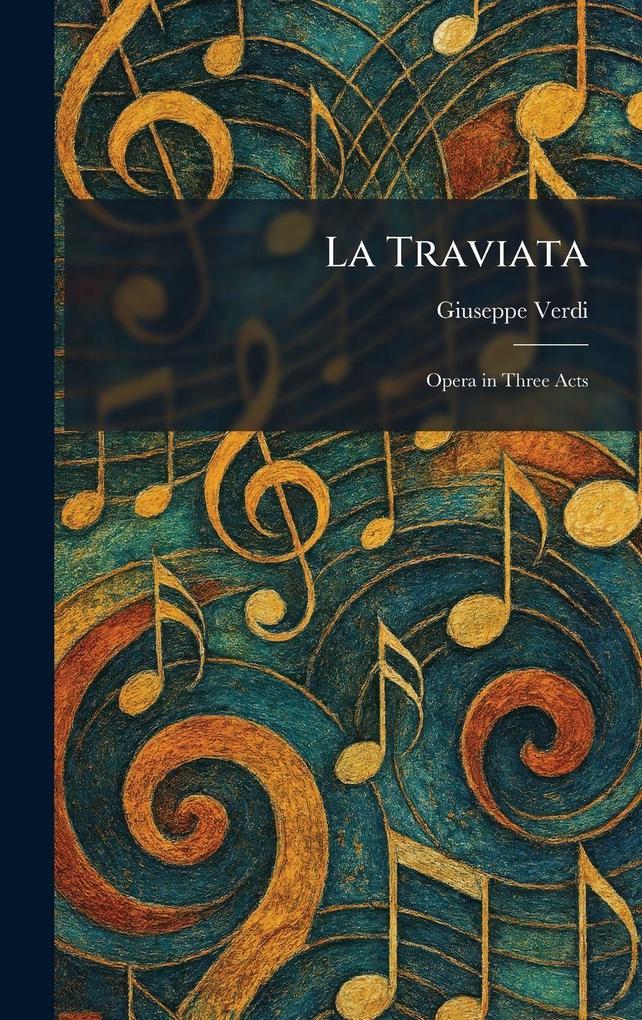
"La Traviata" is one of the most beloved and enduring works in the operatic repertoire. Composed by Giuseppe Verdi with a libretto by Francesco Maria Piave, this masterpiece is based on Alexandre Dumas fils' novel "La Dame aux Camélias". The story follows the tragic life of Violetta Valéry, a famed courtesan in mid-19th century Paris, and her ill-fated love for the young nobleman Alfredo Germont. Spanning three emotional acts, the opera explores themes of sacrifice, societal judgment, and the redeeming power of love.Verdi's score is renowned for its lyrical beauty and dramatic intensity, featuring iconic arias and duets that have become cornerstones of classical music. From the festive spirit of the opening Brindisi to the heartbreaking finale, the work captures the nuances of human emotion with profound sensitivity. As a staple of international opera houses, "La Traviata" remains a poignant exploration of the conflict between personal desire and social convention. This edition provides the complete structure of the three-act opera, offering readers and performers a deep look into the narrative and musical architecture of one of Verdi's finest achievements.
This work has been selected by scholars as being culturally important, and is part of the knowledge base of civilization as we know it. This work was reproduced from the original artifact, and remains as true to the original work as possible. Therefore, you may see the original copyright references, library stamps (as most of these works have been housed in our most important libraries around the world), and other notations in the work.
This work is in the public domain in the United States of America, and possibly other nations. Within the United States, you may freely copy and distribute this work, as no entity (individual or corporate) has a copyright on the body of the work.
As a reproduction of a historical artifact, this work may contain missing or blurred pages, poor pictures, errant marks, etc. Scholars believe, and we concur, that this work is important enough to be preserved, reproduced, and made generally available to the public. We appreciate your support of the preservation process, and thank you for being an important part of keeping this knowledge alive and relevant.