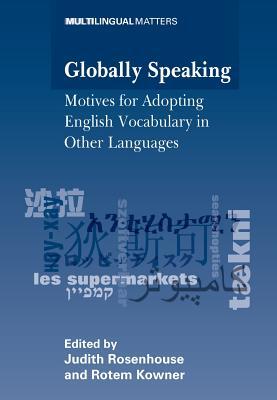
This volume accounts for the motives for contemporary lexical borrowing from English, using a comparative approach and a broad cross-cultural perspective. It investigates the processes involved in the penetration of English vocabulary into new environments and the extent of their integration into twelve languages representing several language families, including Icelandic, Dutch, French, Russian, Hungarian, Hebrew, Arabic, Amharic, Persian, Japanese, Taiwan Chinese, and several languages spoken in southern India. Some of these languages are studied here in the context of borrowing for the first time ever. All in all, this volume suggests that the English lexical 'invasion', as it is often referred to, is a natural and inevitable process. It is driven by psycholinguistic, sociolinguistic, and socio-historical factors, of which the primary determinants of variability are associated with ethnic and linguistic diversity.
Inhaltsverzeichnis
1. The Hegemony of English and Determinants of Borrowing from Its Vocabulary; 2. Icelandic: Phono-Semantic Matching; 3. French: Tradition vs. Innovation as Reflected in English Borrowings; 4. Dutch: Is It Threatened by English?; 5. Hungarian: Trends and Determinants of English Borrowing in a Market Economy Newcomer; 6. Russian: From Social Realism to Reality Show; 7. Hebrew: Borrowing Ideology and Pragmatic Aspects in a Modern(ized) Language; 8. Colloquial Arabic (in Israel): The Case of English Loanwords in a Minority Language with Diglossia; 9. Amharic: Political and Social Effects on English Loanwords; 10. Farsi: The Process of Modernization and the Advent of English; 11. Indian Languages: Hidden English in Texts and Society; 12. Chinese in Taiwan: Cooking a Linguistic Chop Suey and Embracing English; 13. Japanese: The Dialectic Relationships between "Westerness" and "Japaneseness" as Reflected in English Loanwords; 14. Conclusion: Features of Borrowing from English in Twelve Languages.