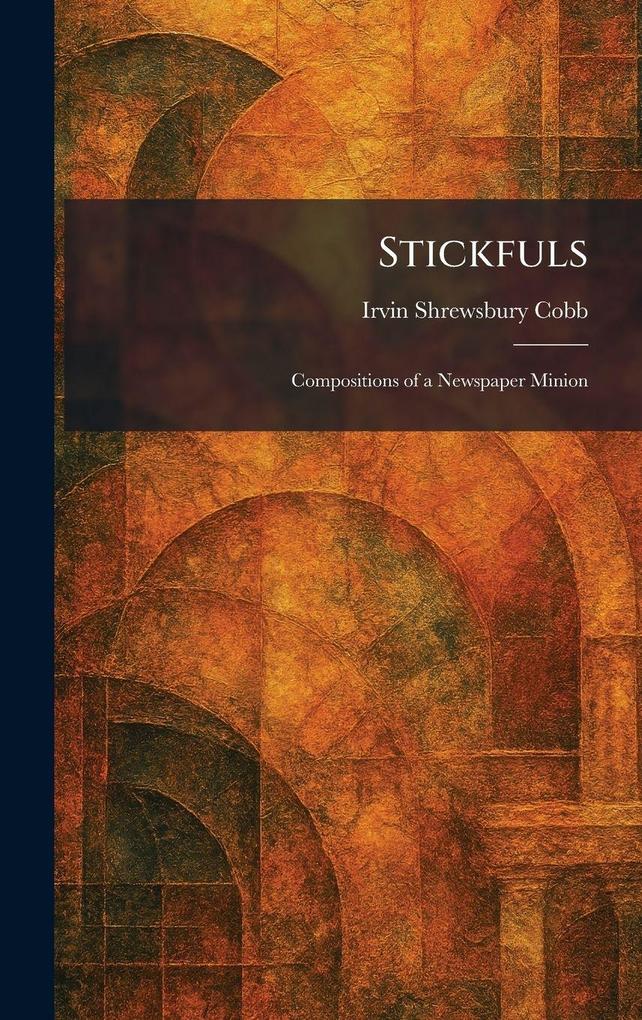
"Stickfuls; Compositions of a Newspaper Minion" is a captivating autobiographical account and a sharp-witted exploration of the world of American journalism during the late 19th and early 20th centuries. Written by the renowned humorist and seasoned reporter Irvin S. Cobb, this work offers a firsthand perspective on the evolution of the newspaper industry, from the small-town press to the bustling newsrooms of New York City.
Through a series of engaging anecdotes and professional reflections, Cobb details the "stickfuls"-the small measures of type set by hand-that defined his early career. He provides an intimate look at the characters, the deadline pressures, and the ethical dilemmas that shaped the golden age of print media. More than just a personal memoir, the book serves as a social commentary on the power of the press and the art of storytelling.
Readers interested in the history of communication, the craft of journalism, and the life of one of America's most beloved columnists will find "Stickfuls; Compositions of a Newspaper Minion" both educational and deeply entertaining. Cobb's signature humor and keen eye for detail bring to life a vanished era of ink-stained fingers and breaking news.
This work has been selected by scholars as being culturally important, and is part of the knowledge base of civilization as we know it. This work was reproduced from the original artifact, and remains as true to the original work as possible. Therefore, you may see the original copyright references, library stamps (as most of these works have been housed in our most important libraries around the world), and other notations in the work.
This work is in the public domain in the United States of America, and possibly other nations. Within the United States, you may freely copy and distribute this work, as no entity (individual or corporate) has a copyright on the body of the work.
As a reproduction of a historical artifact, this work may contain missing or blurred pages, poor pictures, errant marks, etc. Scholars believe, and we concur, that this work is important enough to be preserved, reproduced, and made generally available to the public. We appreciate your support of the preservation process, and thank you for being an important part of keeping this knowledge alive and relevant.