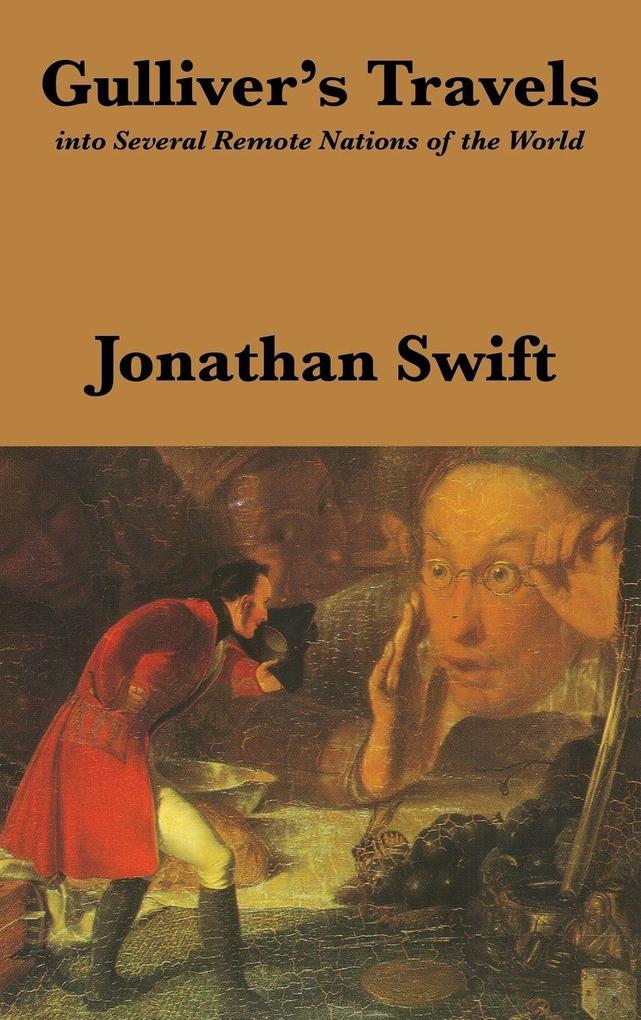
Jonathan Swift was an Anglo-Irish writer, satirist, poet, essayist, political pamphleteer, and clergyman, best known as the author of Gulliver's Travels and one of the greatest prose satirists in the English language. Born in Dublin and educated at Trinity College, Swift became closely involved in the literary, political, and religious controversies of late seventeenth- and early eighteenth-century Britain and Ireland. His career joined church office, public argument, literary invention, and fierce moral criticism, giving his work a distinctive mixture of intellectual force, comic precision, anger, and rhetorical control.Swift's major works include A Tale of a Tub, The Battle of the Books, A Modest Proposal, The Drapier's Letters, and Gulliver's Travels. His satire attacks corruption, vanity, false learning, sectarian conflict, political folly, colonial exploitation, and the self-flattering assumptions of human reason. Though often dark and unsparing, his writing is also exact, inventive, and deeply influential in the development of English prose style. Swift's combination of political intelligence, literary imagination, and satirical severity shaped later fiction, journalism, essay writing, and political commentary, and his work remains essential to readers of eighteenth-century literature, Irish literature, English classics, political satire, and the history of the novel.