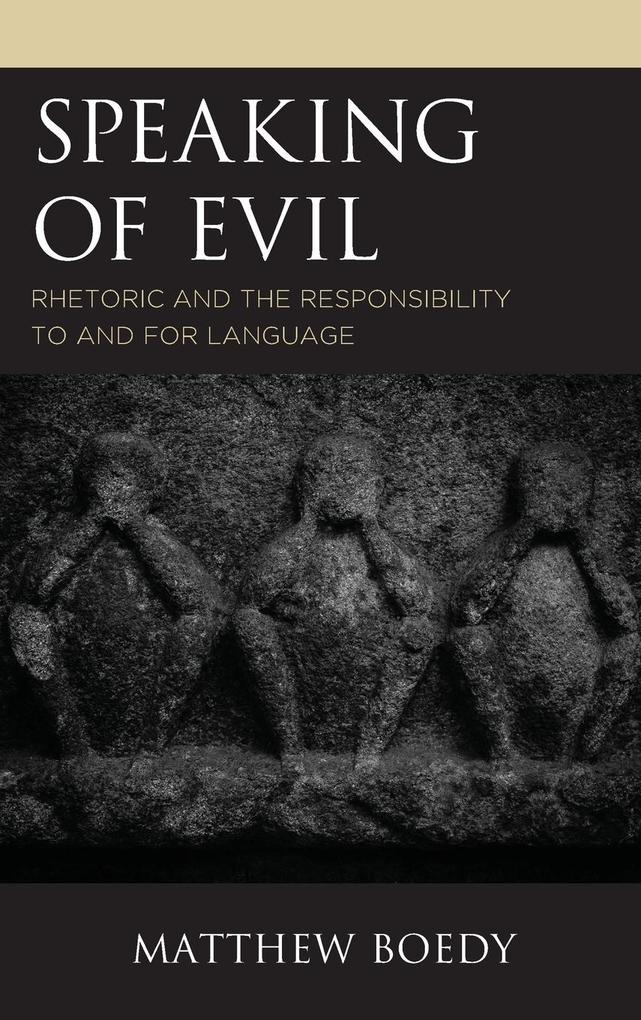
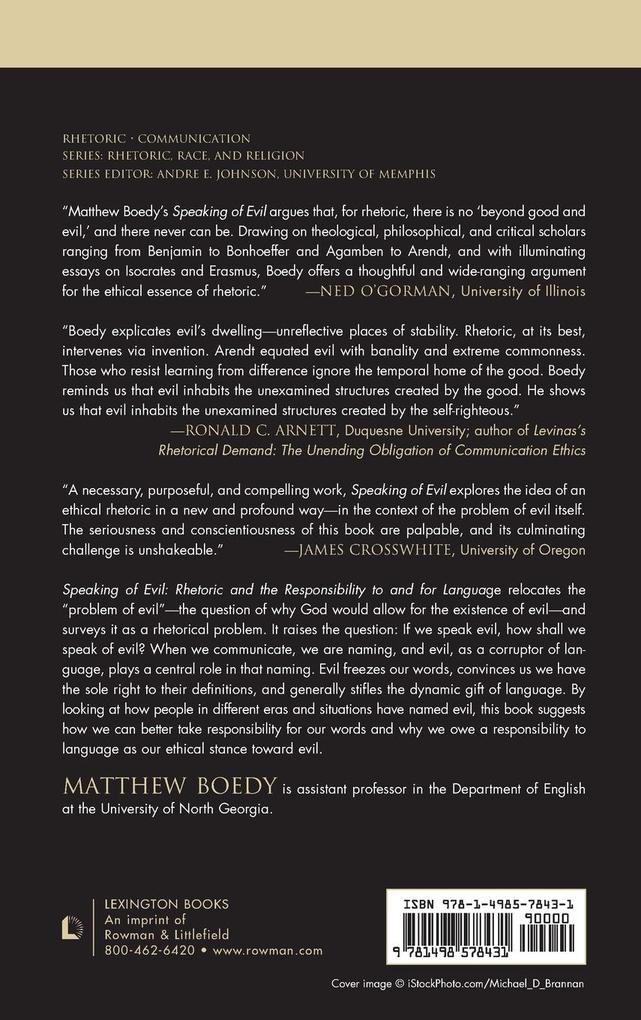
Rhetoric and the Responsibility to and for Language: Speaking of Evil relocates the "problem of evil"- the question of why God would allow for the existence of evil-and surveys it as a rhetorical problem. It raises this question: if we speak evil, how shall we speak of evil? When we communicate, we are naming, and evil as the corruption of language plays a central role in that naming. Evil freezes our words, convinces us we have the sole right to their definitions, and generally stifles the dynamic gift of language. By looking at how people in different eras and situations have named evil, this book suggests how we can better take responsibility for our words and why we owe a responsibility to language as our ethical stance toward evil.
Inhaltsverzeichnis
Acknowledgements
Introduction
Chapter One: On Genesis 3
Chapter Two: The Case of Isocrates
Chapter Three: The Case of Erasmus
Chapter Four: The Case of Bonhoeffer and Arendt
Chapter Five: The Case of September 11th
Conclusion
Bibliography
Index
About the Author