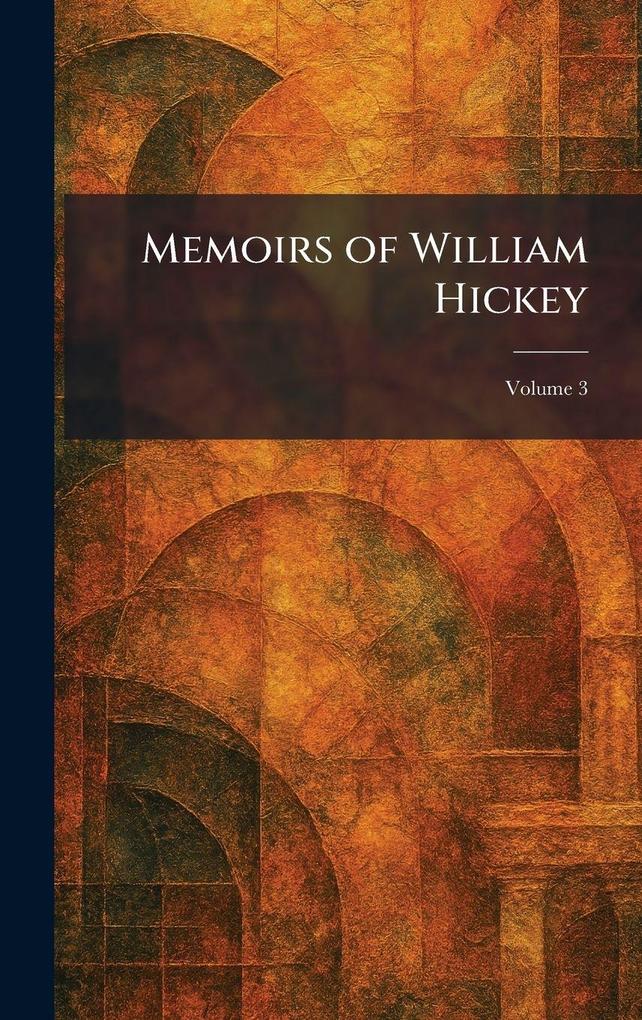
"Memoirs of William Hickey Volume 3 1782 - 1790" offers a vivid and remarkably candid firsthand account of life during the height of the British Georgian era. This third volume covers a pivotal period in Hickey's life, detailing his experiences and observations as he navigates the complex social and professional landscapes of both London and British India.
As a prominent lawyer and bon vivant, Hickey provides an unfiltered look into the scandals, legal battles, and daily routines of the late 18th century. His narratives are particularly valuable for their depiction of the British community in Bengal, capturing the atmosphere of the East India Company's administration and the social dynamics of the colonial elite. From the high-stakes world of the courtroom to the boisterous social gatherings of the era, Hickey's prose brings to life the personalities and events that shaped his world.
Renowned for its honesty and lack of moralizing, this volume remains an essential source for historians and readers interested in 18th-century social history, colonial administration, and the personal adventures of one of the period's most colorful figures. "Memoirs of William Hickey Volume 3 1782 - 1790" stands as a cornerstone of autobiographical literature, preserving the voice of a man who lived his life with unbridled enthusiasm and recorded it with exceptional detail.
This work has been selected by scholars as being culturally important, and is part of the knowledge base of civilization as we know it. This work was reproduced from the original artifact, and remains as true to the original work as possible. Therefore, you may see the original copyright references, library stamps (as most of these works have been housed in our most important libraries around the world), and other notations in the work.
This work is in the public domain in the United States of America, and possibly other nations. Within the United States, you may freely copy and distribute this work, as no entity (individual or corporate) has a copyright on the body of the work.
As a reproduction of a historical artifact, this work may contain missing or blurred pages, poor pictures, errant marks, etc. Scholars believe, and we concur, that this work is important enough to be preserved, reproduced, and made generally available to the public. We appreciate your support of the preservation process, and thank you for being an important part of keeping this knowledge alive and relevant.