Bücher versandkostenfrei*100 Tage Rückgaberecht***Abholung in über 100 Filialen
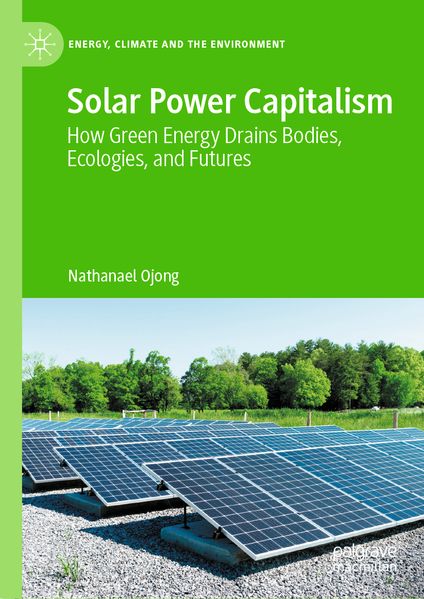
This book demonstrates how Africa s celebrated green-energy transition rests on hidden structures of exploitation and inequality. Drawing on over 300 interviews across Ghana, Kenya, Tanzania, Malawi, and Cameroon, the book illustrates how solar power expands through what the author terms insertion: the patterned incorporation of people, ecologies, and institutions into infrastructures of accumulation, and depletion, the bodily, ecological, and temporal exhaustion through which those infrastructures are sustained. Beginning with colonial electrification schemes that privileged mines and settlers, the book follows the engineering of global solar energy markets, the rise of pay-as-you-go household finance, and the toxic afterlives of solar waste. Later chapters reveal how women s labor, time, and credit become the unacknowledged infrastructure of solar power capitalism, and how communities navigate enclosure, debt, and ecological harm. The book redefines what a just energy transition means in the twenty-first century.
Inhaltsverzeichnis
Chapter 1: A Framework for Engaging Solar Energy Capitalism. - Chapter 2: Historicizing the Ascendance of Solar Energy Deployment in sub-Saharan Africa. - Chapter 3: Solar Energy and Structural Dependency in the Postcolony. - Chapter 4: Financial Intermediation, Debt, and Solar-fueled Accumulation. - Chapter 5: Solar Power and the (Re)production of Class and Gendered Violence. - Chapter 6: Solar Power, Solar Waste, and Environmental Destruction.
Es wurden noch keine Bewertungen abgegeben. Schreiben Sie die erste Bewertung zu "Solar Power Capitalism" und helfen Sie damit anderen bei der Kaufentscheidung.