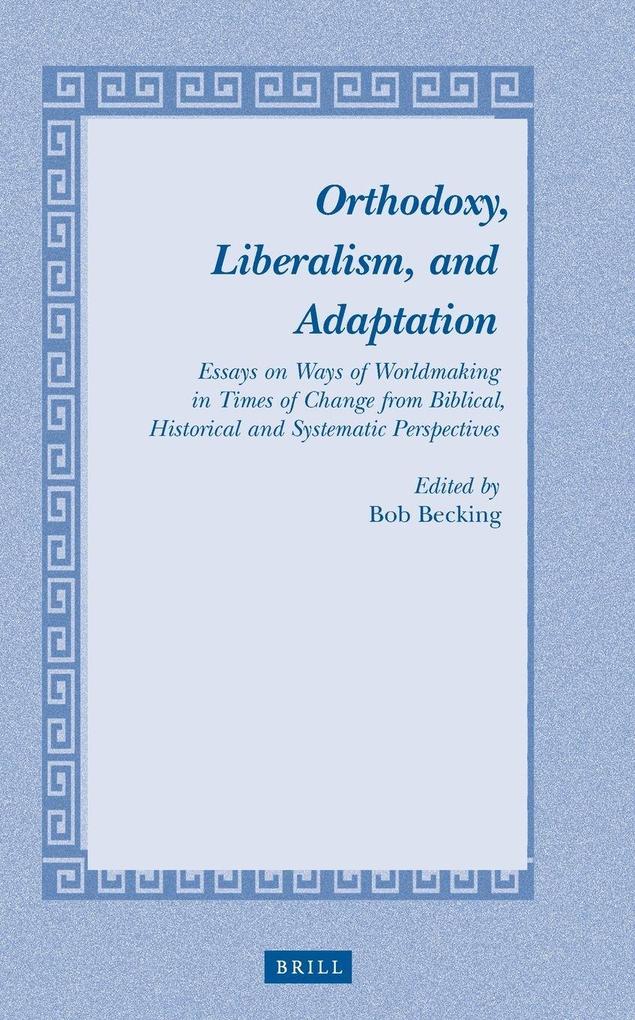
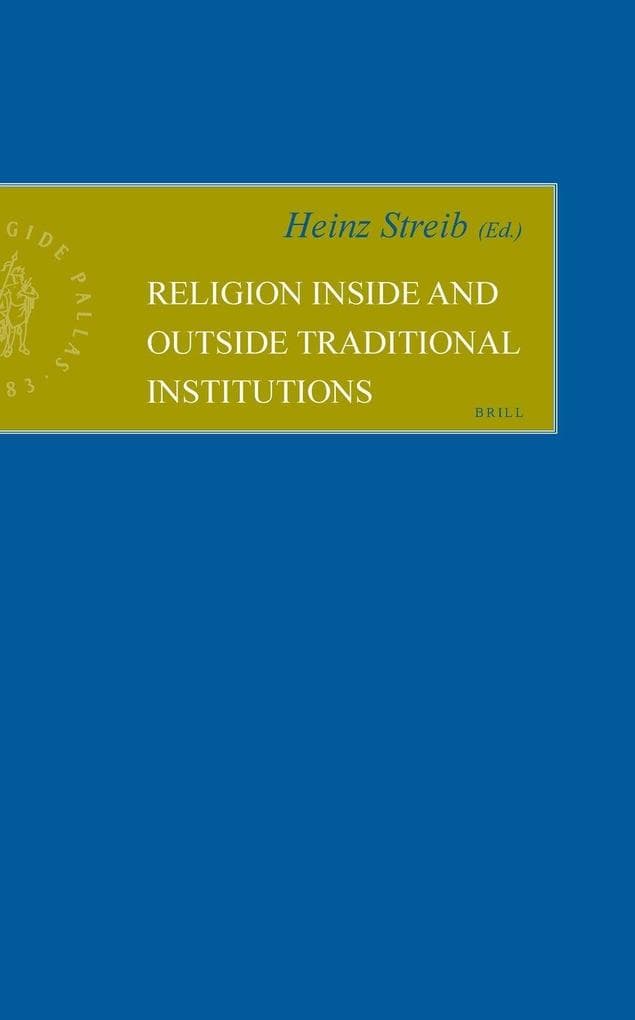
How does religion cope with changing situations? Are orthodoxy and liberalism really competing strategies? The essays in this volume argue three views. (1)Orthodoxy is not to be seen as the real and original form of a given religion, but as an idealized original form that should be construed as a construction in reaction to changes in time. (2) Over the ages, liberalism - despite its laudable strive for adaptation - has been less successful than generally assumed. This lesson from history can be quite important in view of the adaptation processes for Muslims in Western Europe. (3) Of great importance for the survival of religion seems to be a clear definition of the boundaries of religiously informed practices and ethics. Their recognisability and authenticity shall - when combined with a due lack of obtrusion - be of great influence for the ongoing acceptance of religion(s) in the public domain.
Inhaltsverzeichnis
Introduction: Why This Volume Bob Becking (Utrecht University)
Chapter One: Religious Orthodoxy as a Modality of "Adaptation" Staf Hellemans (Tilburg University)
Part II BIBLICAL STUDIES
Chapter Two: Does an Exclusive Veneration of God Necessarily Have to Be Violent? Israel's Stony Way to Monotheism and Some Theological Consequences Rainer Albertz (University of Munster)
Chapter Three: Coping with Violence in the Bible: A Response to Rainer Albertz Jan Willem van Henten (University of Amsterdam)
Chapter Four: "Common Judaism", "the Parting of the Ways", and "the Johannine Community" Adele Reinhartz (University of Toronto)
Part III HISTORICAL STUDIES
Chapter Five: Believing, Belonging, and Adapting. The Case of Religious Modernism Ernestine van der Wall (Leiden University)
Chapter Six: "When Creed and Morals Rot ...": Orthodoxies versus Liberalisms in the Nineteenth-Century Netherlands Reformed Church David J. Bos (Utrecht University)
Chapter Seven: Truth, Orthodoxy, and the Nouvelle Theologie: Truth as Issue in a "Second Modernist Crisis" (1946-1950) Jurgen Mettepenningen (Leuven University)
Part IV SYSTEMATIC STUDIES
Chapter Eight: Orthodoxy, History and Theology: Recontextualisation and Its Descriptive and Programmatic Features Lieven Boeve (Catholic University Leuven)
Chapter Nine: Orthopraxis and Being Faithful to One's Tradition Peter Jonkers (Tilburg University)
Chapter Ten: Reconstructing the Change from Judaism to Christianity as a Paradigm Shift Dirk-Martin Grube (Utrecht University)
Chapter Eleven: Christian Fundamentalism as a Reaction to the Enlightenment Illustrated by the Case of Biblical Inerrancy Marcel Sarot (Utrecht University)
Part V CONCLUSIONS
Chapter Twelve: The Ambivalence of Adaptation and the Ongoing Strength of Religion Bob Becking (Utrecht University)