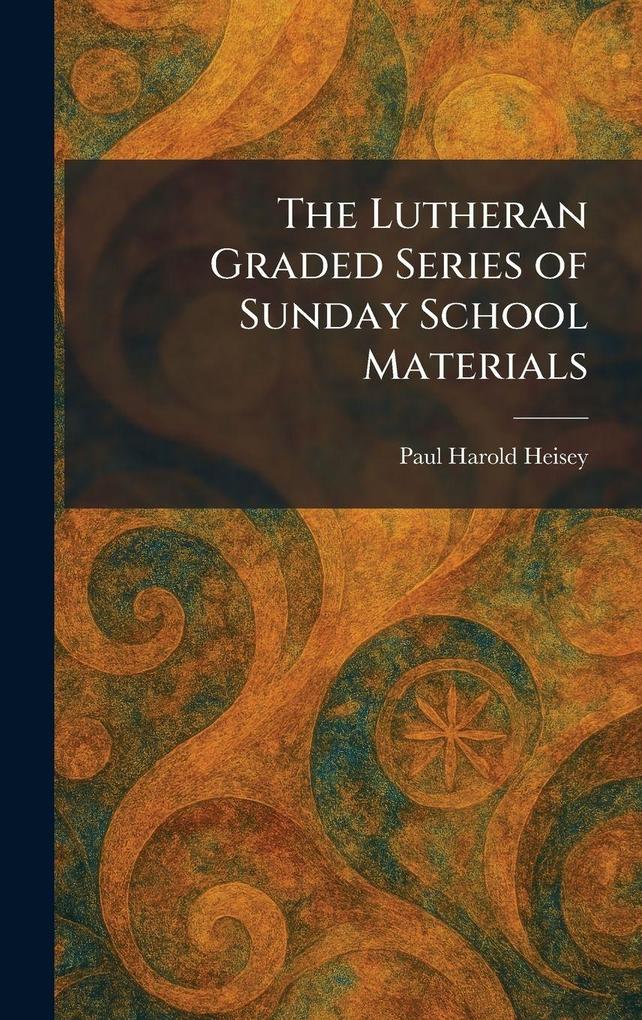
"The Lutheran Graded Series of Sunday School Materials" is a detailed scholarly examination of the pedagogical and theological framework behind the curriculum used for Lutheran youth instruction. Written by Paul Harold Heisey, a specialist in religious education, this work analyzes the shift toward age-appropriate lesson plans and the structured delivery of Christian doctrine. The text explores how educational principles were integrated into the Sunday school environment to ensure a comprehensive spiritual foundation for children and young adults. Heisey evaluates the specific goals of the "Lutheran Graded Series," highlighting its role in the broader landscape of early 20th-century Protestant education. By discussing the development and application of these materials, the book provides valuable insights into the history of religious instruction and the methodology used to foster faith in a systematic manner.
This work serves as a significant historical resource for educators, theologians, and historians interested in the evolution of the Lutheran tradition's educational practices and its commitment to thorough Christian formation. It remains an important study of how modern educational theories were adapted to serve the spiritual needs of the church community.
This work has been selected by scholars as being culturally important, and is part of the knowledge base of civilization as we know it. This work was reproduced from the original artifact, and remains as true to the original work as possible. Therefore, you may see the original copyright references, library stamps (as most of these works have been housed in our most important libraries around the world), and other notations in the work.
This work is in the public domain in the United States of America, and possibly other nations. Within the United States, you may freely copy and distribute this work, as no entity (individual or corporate) has a copyright on the body of the work.
As a reproduction of a historical artifact, this work may contain missing or blurred pages, poor pictures, errant marks, etc. Scholars believe, and we concur, that this work is important enough to be preserved, reproduced, and made generally available to the public. We appreciate your support of the preservation process, and thank you for being an important part of keeping this knowledge alive and relevant.