Bücher versandkostenfrei*100 Tage RückgaberechtAbholung in über 100 Filialen
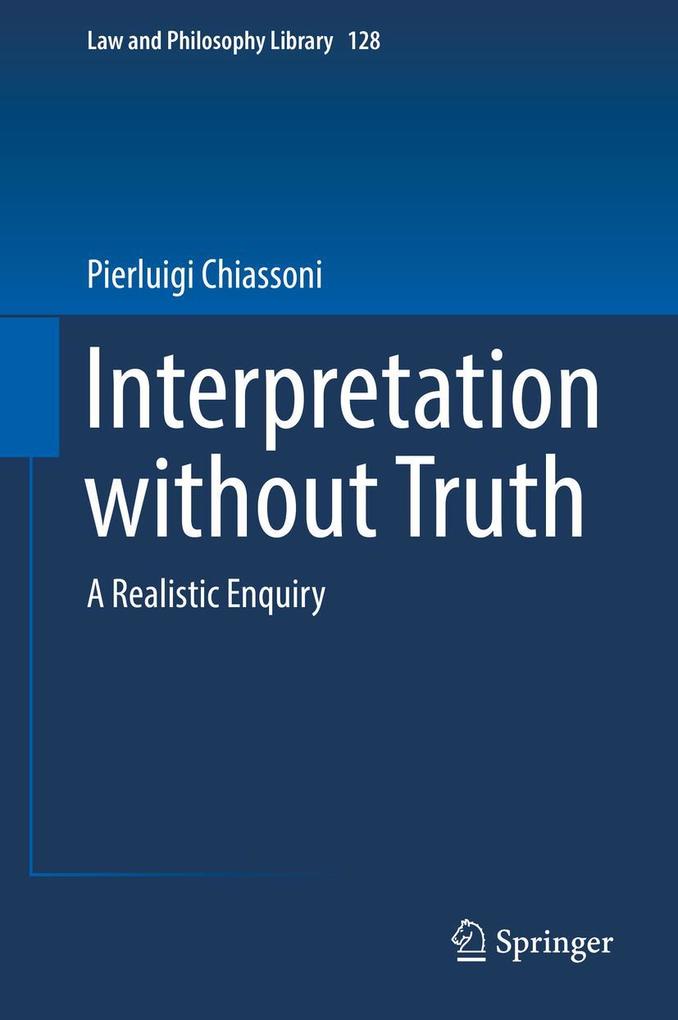
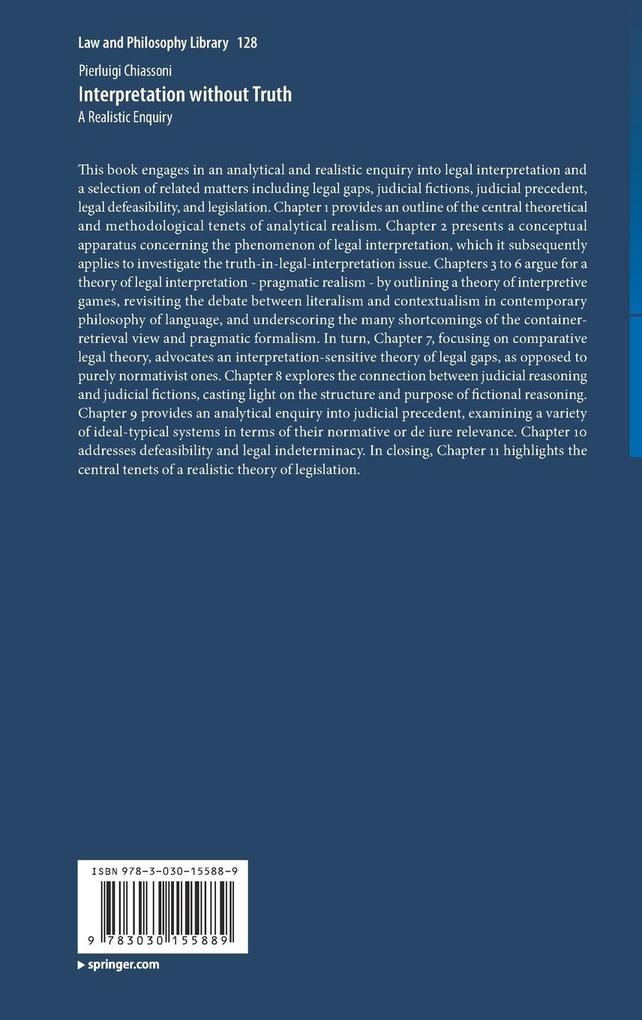
This book engages in an analytical and realistic enquiry into legal interpretation and a selection of related matters including legal gaps, judicial fictions, judicial precedent, legal defeasibility, and legislation. Chapter 1 provides an outline of the central theoretical and methodological tenets of analytical realism. Chapter 2 presents a conceptual apparatus concerning the phenomenon of legal interpretation, which it subsequently applies to investigate the truth-in-legal-interpretation issue. Chapters 3 to 6 argue for a theory of legal interpretation - pragmatic realism - by outlining a theory of interpretive games, revisiting the debate between literalism and contextualism in contemporary philosophy of language, and underscoring the many shortcomings of the container-retrieval view and pragmatic formalism. In turn, Chapter 7, focusing on comparative legal theory, advocates an interpretation-sensitive theory of legal gaps, as opposed to purely normativist ones. Chapter 8 explores the connection between judicial reasoning and judicial fictions, casting light on the structure and purpose of fictional reasoning. Chapter 9 provides an analytical enquiry into judicial precedent, examining a variety of ideal-typical systems in terms of their normative or de iure relevance. Chapter 10 addresses defeasibility and legal indeterminacy. In closing, Chapter 11 highlights the central tenets of a realistic theory of legislation.
Inhaltsverzeichnis
1. Introduction: The Path of Analytical Realism. - 2. Interpretation, Truth, and the Logical Forms of Interpretive Discourse. - 3. Interpretive Games. - 4. Taking Context Seriously. - 5. Frames v. Containers. - 6. Towards Pragmatic Realism. - 7. Legal Gaps. - 8. Judicial Fictions. - 9. Precedent. - 10. Defeasibility and Legal Indeterminacy. - 11. Legislation.
Es wurden noch keine Bewertungen abgegeben. Schreiben Sie die erste Bewertung zu "Interpretation without Truth" und helfen Sie damit anderen bei der Kaufentscheidung.