Bücher versandkostenfrei*100 Tage Rückgaberecht***Abholung in über 100 Filialen
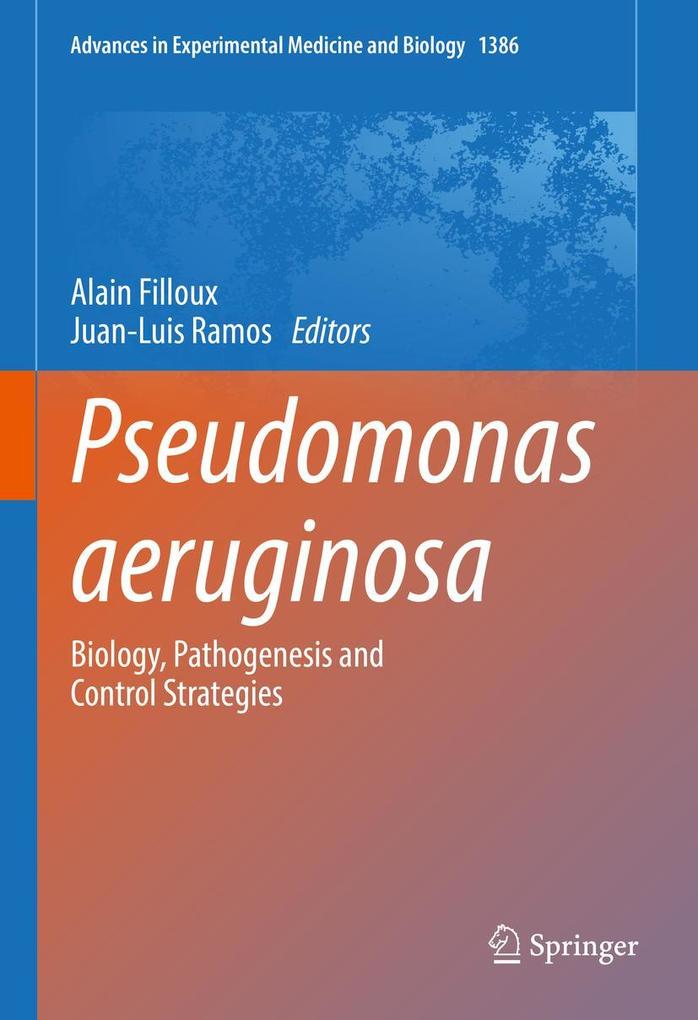
This book covers the wide set of well-regulated virulence factors and defense mechanisms of Pseudomonas aeruginosa focusing on stress responses and the evolution of this opportunistic human pathogen.
Pseudomonas aeruginosa is responsible for one out of ten hospital infections. Additionally, this Gram-negative bacterium is accountable for persistent infections in immunocompromised individuals and the leading cause of chronic lung infections in cystic fibrosis patients.
This book provides insight on the metabolic versatility of Pseudomonas aeruginosa and its mechanisms for biofilm formation that make this organism highly efficient in causing infections. The book invites the readers to learn more about the intrinsic ability of Pseudomonas aeruginosa to resist a wide variety of antimicrobial agents due to the concerted action of multidrug efflux pumps, antibiotic-degrading enzymes, and the low permeability of bacterial cellular envelopes. Particular focus is put on the evolutionary role of different types of protein-secretion systems in pathogenesis, flagella and their role in chemotaxis and surface sensing, and host-pathogen interactions.
This book is a useful introduction to the field for junior scientists interested in the biology and pathogenesis of Pseudomonas aeruginosa. It is also an interesting read for advanced scientists and medical specialists working within this field, providing a broader view of the topic beyond their specific area of specialization.
Inhaltsverzeichnis
Part I. Biology and Evolution of
Pseudomonas aeruginosa
. -
Pseudomonas aeruginosa
Pangenome: Core and Accessory Genes of a Highly Resourceful Opportunistic Pathogen. - Iron Homeostasis in
Pseudomonas aeruginosa
: Targeting Iron Acquisition and Storage as an Antimicrobial Strategy. - Controlling Biofilm Development Through Cyclic di-GMP Signaling. -
Pseudomonas aeruginosa
Quorum Sensing. - Antibiotic Resistance in
Pseudomonas
. -
Part II. Cell Envelope and Secretion Systems. -
Cell Envelope Stress Response in
Pseudomonas aeruginosa
. - Flagella, Chemotaxis and Surface Sensing. - Antimicrobial Weapons of
Pseudomonas aeruginosa
. -
Pseudomonas aeruginosa
Antivirulence Strategies: Targeting the Type III Secretion. -
Part III. Pathogenesis and Virulence
. - What Makes
Pseudomonas aeruginosa
a Pathogen? . - Transcriptional Profiling of
Pseudomonas aeruginosa
Infections. - Molecular Mechanisms Involved in
Pseudomonas aeruginosa
Bacteremia. -
Pseudomonas aeruginosa
in the Cystic Fibrosis Lung. - Role of Two Component System Networks in
Pseudomonas aeruginosa
Pathogenesis. - Mixed Populations and Co-Infection:
Pseudomonas aeruginosa
and
Staphylococcus aureus
. - How to Manage
Pseudomonas aeruginosa
Infections.
Es wurden noch keine Bewertungen abgegeben. Schreiben Sie die erste Bewertung zu "Pseudomonas aeruginosa" und helfen Sie damit anderen bei der Kaufentscheidung.