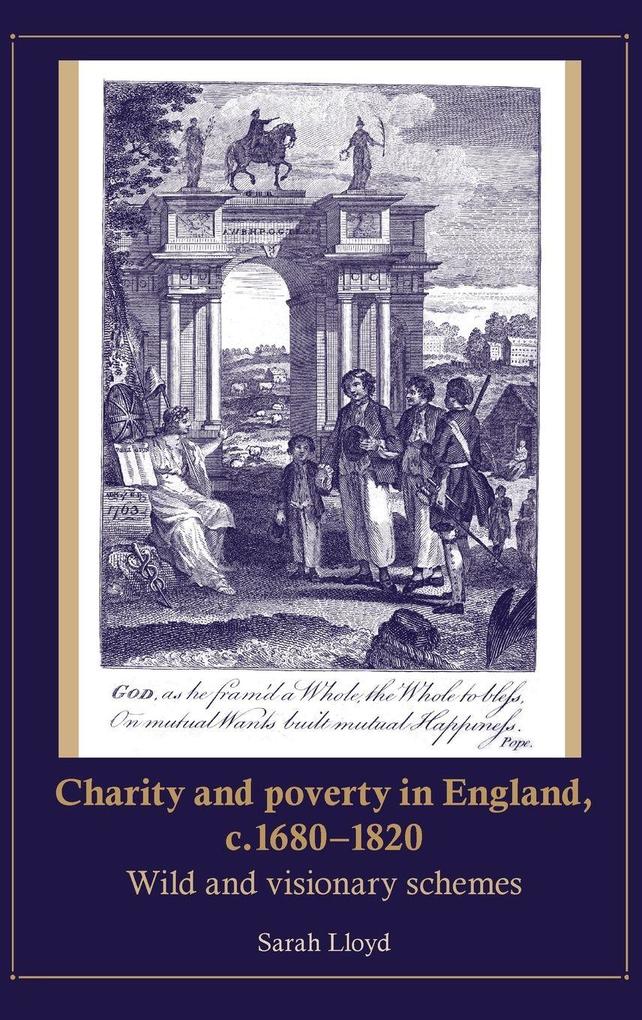
This book explores responses to poverty in eighteenth-century England, with an eye to some of the odder manifestations of charity and poor relief. Whether discussing proposals for vast inland colonies or cosy firesides, men and women demonstrated that imagination, excitement and experiment were as important as systematic argument in making early-modern social policy. Ceremonies and material objects encapsulated ideas and attracted supporters; energy poured into realising imagined prospects in buildings, streetscapes and landscapes across England and beyond.
Charity and Poverty in England aims to shed fresh light on ideas and lived experience, on cultural worlds in which social relations were unevenly worked out. It analyses the settings in which gentlemen, magistrates, officials, pamphleteers, ladies and neighbours reacted to the poverty of others, and poor people asserted their own beliefs and experiences.
The book will be of interest to researchers in the fields of eighteenth-century cultural history and the history of social policy.
Inhaltsverzeichnis
Acknowledgements
List of figures
1. Introduction: acts of imagination
2. Usefulness and beyond
3. Wild & visionary schemes
4. English oaks: William Hanbury & Jonas Hanway
5. Charitable things I: memory and spectacle
6. Charitable things II: food and fashion
7. Cottage conversations: poverty and manly independence in late eighteenth-century England
8. Conclusions
Index