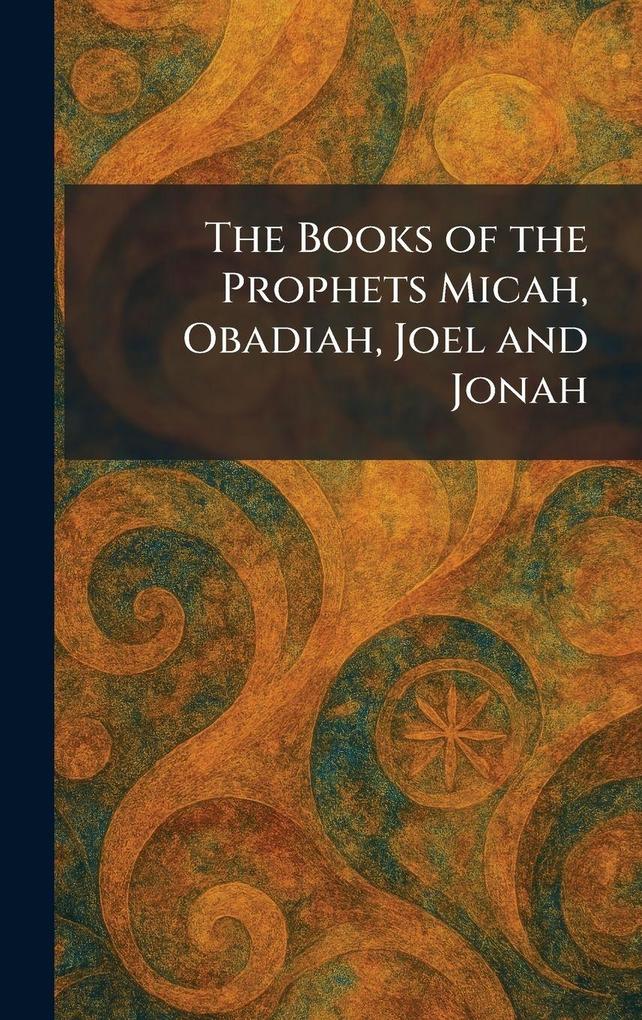
"The Books of the Prophets Micah, Obadiah, Joel and Jonah" offers an insightful exploration into the lives and messages of four significant figures within the Minor Prophets of the Old Testament. This collection brings together diverse prophetic traditions that address a range of themes, from social justice and divine judgment to the profound reach of mercy and repentance. Each book within this volume provides a unique perspective on the spiritual and historical landscape of ancient Israel.
The text examines the powerful social critiques of Micah, the focused vision of Obadiah regarding national destiny, the striking apocalyptic imagery found in the book of Joel, and the celebrated narrative of Jonah's journey to Nineveh. By presenting these works together, the volume highlights the interconnected nature of prophetic literature and its enduring relevance to theological study. Readers will find a wealth of information regarding the literary structure and historical context of these scriptures, making it an invaluable resource for students of the Bible, clergy, and those interested in the ethical and spiritual foundations of Western religious thought. This work underscores the timeless literary value and historical significance of these distinct prophetic voices.
This work has been selected by scholars as being culturally important, and is part of the knowledge base of civilization as we know it. This work was reproduced from the original artifact, and remains as true to the original work as possible. Therefore, you may see the original copyright references, library stamps (as most of these works have been housed in our most important libraries around the world), and other notations in the work.
This work is in the public domain in the United States of America, and possibly other nations. Within the United States, you may freely copy and distribute this work, as no entity (individual or corporate) has a copyright on the body of the work.
As a reproduction of a historical artifact, this work may contain missing or blurred pages, poor pictures, errant marks, etc. Scholars believe, and we concur, that this work is important enough to be preserved, reproduced, and made generally available to the public. We appreciate your support of the preservation process, and thank you for being an important part of keeping this knowledge alive and relevant.